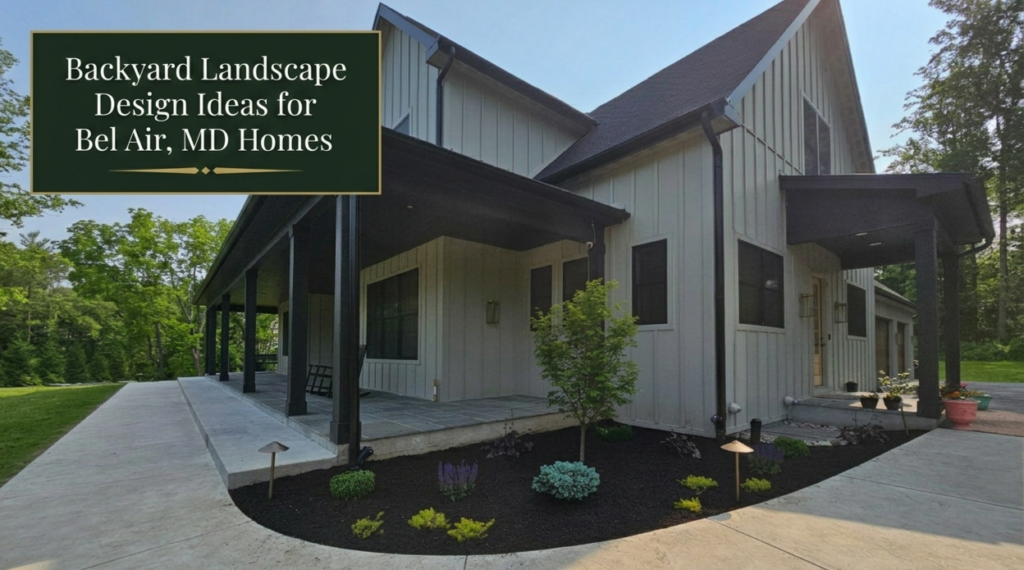
Bel Air backyards sit in one of the more particular growing situations on the East Coast. Around 46 inches of rain falls here every year, more than in Seattle. Roughly 95% of Maryland land drains toward the Chesapeake Bay, so what leaves your yard has a downstream address. And Harford County has a documented connection to Maryland’s deer population that most homeowners have never heard: after World War II, the deer trapped at Aberdeen Proving Ground were relocated across the state to rebuild the herd, according to the Maryland Department of Natural Resources’ deer management history. The current statewide population sits between 200,000 and 250,000 animals. Your yard has been on their map for eighty years.
Generic backyard idea lists ignore all of that. The design moves below are chosen specifically for local conditions, with the research to back each one.
The short version: Backyard designs that succeed in Bel Air respect three constants: Piedmont clay that holds water, a deer population that finds new plantings quickly, and a location inside the Chesapeake watershed where runoff has consequences. The best designs use layered privacy planting, four-season structure from native trees, rain gardens that turn wet spots into features, native beds suited to acidic clay, thoughtful lighting, scaled water features, and deer-aware plant selection from the first sketch.
1. Layered privacy planting instead of a single hedge line
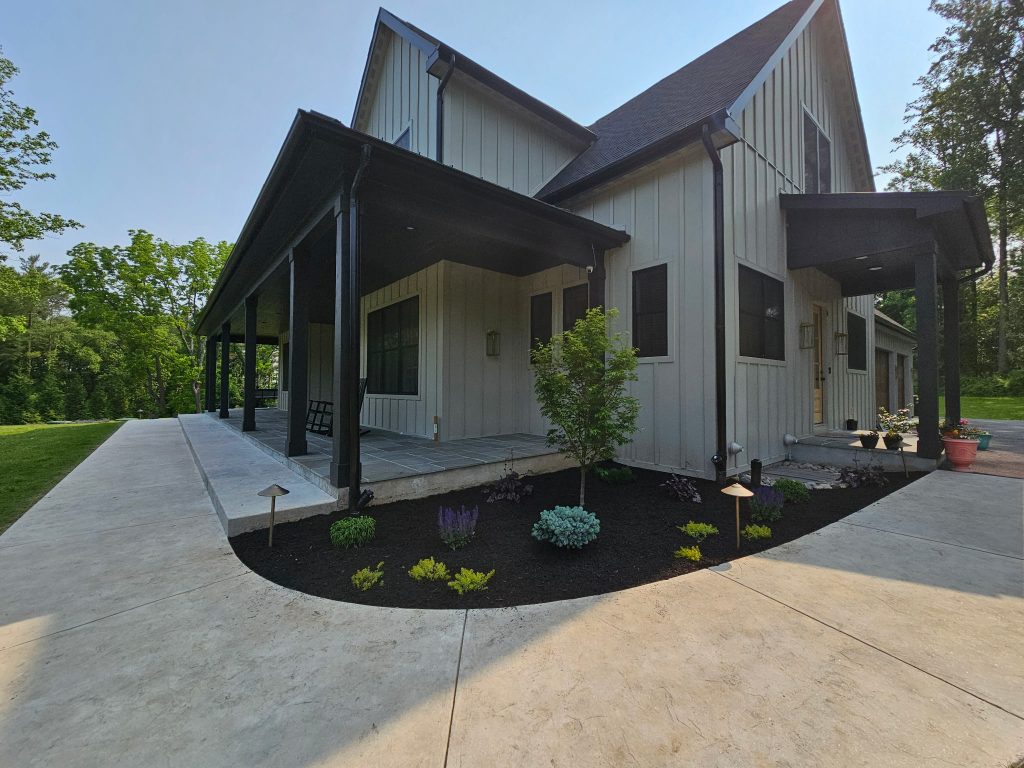
The default privacy move in this county is a straight run of arborvitae, and it usually fails for a specific reason. Arborvitae ranks among the plants deer prefer most, and Bel Air’s deer pressure comes with the territory. One browsed or dead tree breaks the entire screen.
A layered design mixes evergreen anchors, understory flowering trees, and tall shrubs at staggered depths. The screen reads as a garden rather than a fence, keeps functioning if any single plant struggles, and gives you something worth looking at from the kitchen window. We cover specific plant combinations that hold up locally in our guide to privacy screening plants that work year-round in Maryland.
2. Four-season structure with native trees
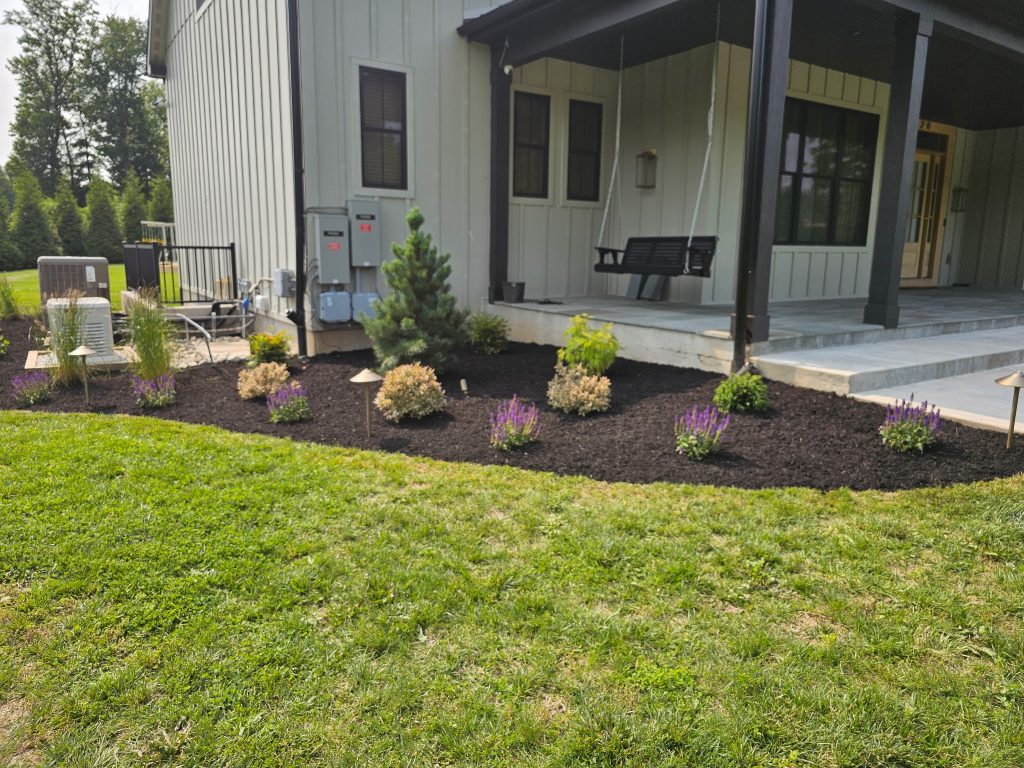
Most backyards look presentable in June. The design test happens in February, when perennials have died back and the bones of the yard have to carry the view. Native ornamental trees do that work: spring bloom, summer canopy, fall color, and winter branch structure.
Species suited to Bel Air’s zone 7a/7b climate and Piedmont clay include serviceberry, river birch, and eastern redbud, all documented by the University of Maryland Extension’s recommended native plants. River birch in particular tolerates the wet clay conditions most ornamentals struggle in, which suits the low corner of a Bel Air lot better than most catalog choices. Our roundup of the best ornamental trees for Maryland goes deeper on placement.
3. A rain garden that turns the wet spot into the feature
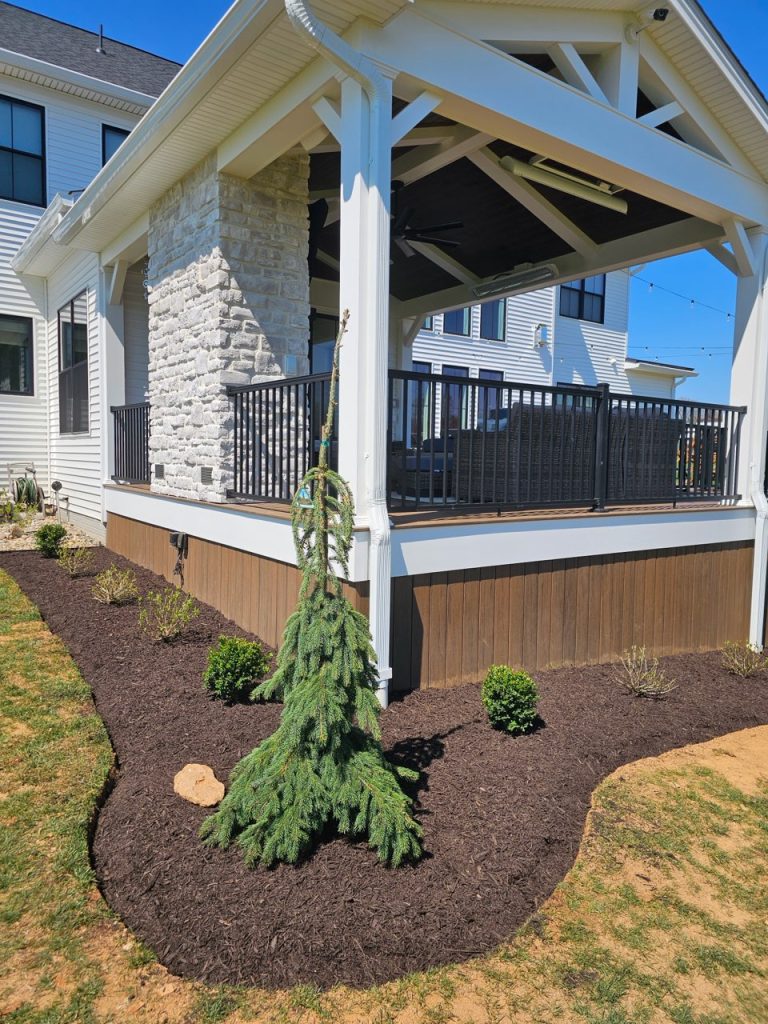
Almost every Bel Air lot has one: a low corner or downspout landing zone that holds water after a summer storm because Piedmont clay cannot absorb it fast enough. A designed rain garden captures that runoff in a shallow, planted basin filled with moisture-loving native species.
The performance numbers are worth reading. According to the Chesapeake Bay Foundation, rain gardens filter up to 93% of the oil in urban and suburban runoff, along with 90% of toxic metals, 70% of sediment, and roughly 30% of phosphorus and 25% of nitrogen from stormwater before it reaches groundwater or streams. Given the 95% of Maryland that drains to the Chesapeake, a rain garden in a Bel Air backyard measurably lightens the load reaching the Bay. Harford County’s stormwater management program encourages exactly this kind of environmental site design practice for that reason. There is also a legal wrinkle worth knowing: since 2023, Maryland has been the first state to protect rain gardens, pollinator gardens, and native plantings from HOA restrictions under HB 950/SB 836. If drainage is the bigger question on your property, start with our companion piece on why Harford County yards hold water and how to fix it.
4. Native beds suited to acidic Piedmont clay
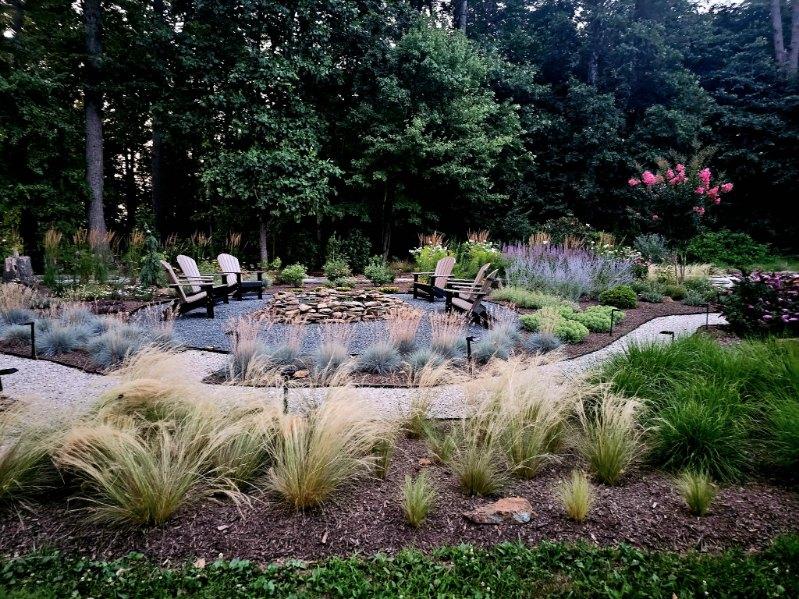
Piedmont clay is dense, slow-draining, and runs acidic, typically pH 5.5 to 6.5. Plants bred for lighter, more neutral soils spend their lives fighting those conditions. Native species evolved here and thrive without the intervention imports demand.
The design opportunity got dramatically better in November 2025, when the University of Maryland Extension released the Maryland Native Plant Guide for the Piedmont Region. It is a 184-page, ecoregion-specific guide written for the swath of Maryland that includes Harford County, drawing on the state’s Native Plant Program legislation from 2023. For any backyard native bed in Bel Air, that guide is the reference standard. Standouts for our clay conditions include little bluestem, a native grass the University of Maryland Extension notes is deer proof and tolerates a range of soils, along with switchgrass, coneflower, and blue false indigo, all documented as suited to Maryland Piedmont conditions. Our guide to native plants that thrive in Harford County covers a working palette.
There is a Bay reason to reduce turf in the design too. According to NASA Earth Observatory and Chesapeake Stormwater Network data, turf grass covers 35.9% of the land in neighboring Baltimore County, more than any crop grown regionally. Shallow-rooted lawn sheds water rather than absorbing it, which is one reason stormwater is the fastest-growing source of pollution to the Chesapeake Bay, contributing 17% of nitrogen and phosphorus loads. Converting even a portion of a Bel Air backyard from lawn to native bed shifts the yard from part of that problem to part of the fix.
5. Landscape lighting for evening use
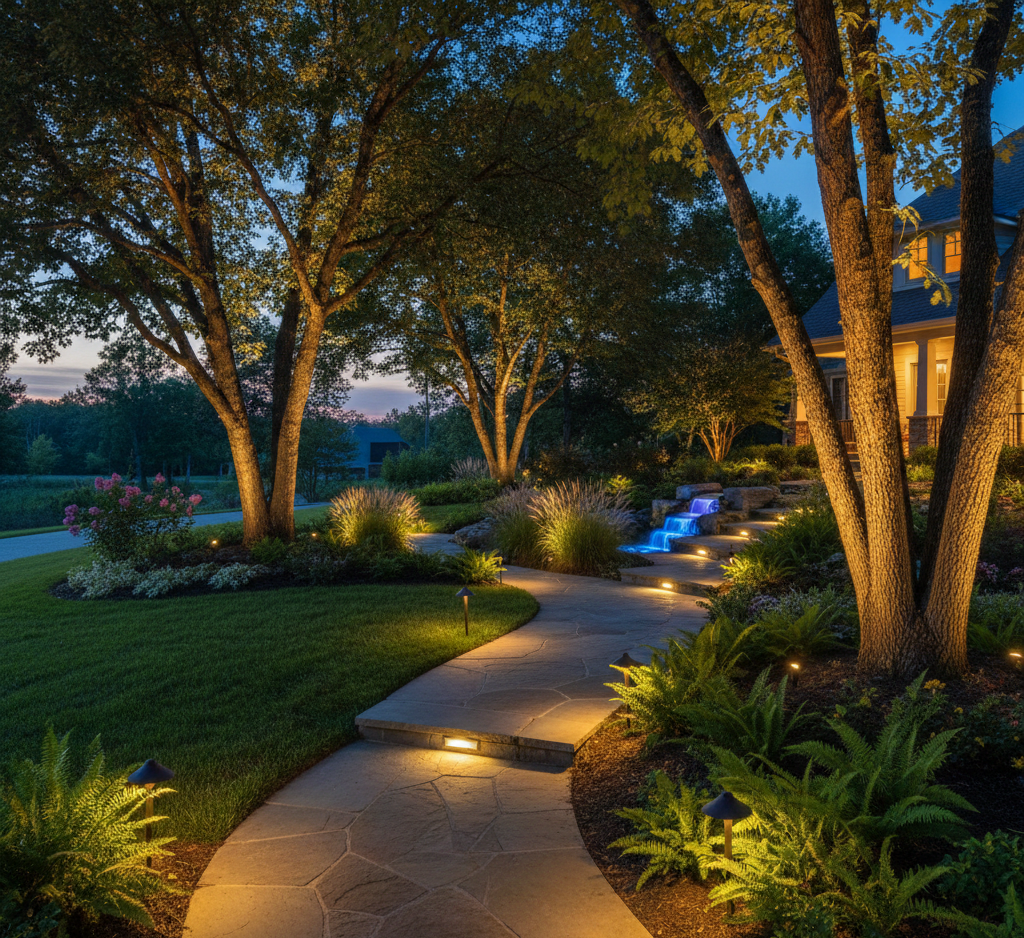
A backyard usable only until sunset is a backyard used half as often. Low-voltage lighting extends the space into the evening with path lights for movement, uplights on those native trees, and soft washes across planting beds. Good lighting design lives on restraint, a few well-placed fixtures rather than a runway of them. We walk through the approach in our landscape lighting design guide.
6. A water feature scaled to Maryland’s freeze-thaw
Moving water changes how a backyard feels, and the right feature for our climate is one built to survive it. Bel Air winters cycle above and below freezing repeatedly, and that freeze-thaw pattern is unkind to poorly built basins, plumbing, and liner details. The choice of feature and construction detail matters more here than the catalog photo suggests. Our guide to water features that actually work in Maryland gardens sorts the durable options from the maintenance headaches.
7. Deer-aware plant selection from the first sketch
Given the Aberdeen Proving Ground history and the sustained statewide population, planning around deer from day one costs less than replacing browsed plantings later. The Maryland DNR now maintains a statewide chronic wasting disease management area covering seven counties, a reminder that the deer population is being actively studied and managed here.
Species with documented deer resistance suited to Bel Air conditions include little bluestem grass, blue false indigo, coneflower, catmint, and boxwood among evergreens. No plant is fully deer-proof, particularly during a hard winter when pressure spikes on formerly untouched species. The design principle: place the most tempting plants closest to the house, use resistant species along vulnerable edges, and expect to protect new plantings for the first year or two while roots establish.
How these ideas work together
Any one of these moves improves a yard. What makes a backyard feel designed rather than assembled is how they interact: the privacy layer frames the view, the native tree anchors it, the lighting makes it usable at night, and the rain garden solves the drainage while filtering pollutants downstream. Getting those decisions right, and in the right order, is the whole argument for design-build, where one team plans and installs the entire picture through a single design and installation process.
If you are weighing a project, our team designs and builds across the area, and you can see how we approach landscaping in Bel Air, MD or call (443) 794-8108 to talk through your yard.
Frequently asked questions
What grows best in Bel Air backyards? Native species suited to Piedmont clay and zones 7a to 7b. Ornamental tree standouts include serviceberry, river birch, and eastern redbud. For beds, little bluestem, switchgrass, coneflower, and blue false indigo all appear in University of Maryland Extension guidance for the region. Plants bred for lighter, more neutral soils tend to struggle without heavy amendment.
How do I design around a wet spot in the yard? Determine whether the cause is grading or slow-draining clay, since the fixes differ. If the spot simply drains slowly, a rain garden planted with moisture-loving natives can capture the runoff, filter it, and turn the problem area into a feature. Rain gardens also filter a documented majority of the pollutants in stormwater before they reach the Chesapeake watershed.
When is the best time to start a landscape design project in Maryland? Design work can begin any time of year, and winter is often ideal because the design is ready when spring installation windows open. Fall is a strong planting season in Maryland because roots establish in warm soil before winter dormancy.
Do these ideas scale to small backyards? Yes, at adjusted proportions. Layered screening, a single well-placed native tree, considered lighting, and a native bed all scale down. Small yards reward design most, because every decision is visible from indoors.
Are native plants really protected from HOA rules in Maryland? Yes. Under 2023 Maryland legislation, homeowners’ associations cannot prohibit low-impact landscaping practices, including rain gardens, pollinator gardens, and native plant installations, provided the landscape is maintained. This isn’t legal advice, and specific HOA covenants may still influence design choices, so review your governing documents.

With over 10 years of experience locally in Maryland, Oakfield Landscaping has a team of skilled professionals ready to deliver exceptional services.
Start your project
Ready to create a landscape that enhances your property and reflects your vision?
Our design process begins with an in-depth consultation:
- Walk your property and discuss your vision
- Review your functional & aesthetic preferences
- Assess existing landscape conditions
- Explain our design-installation process and timeline
- Answer your questions about our approach