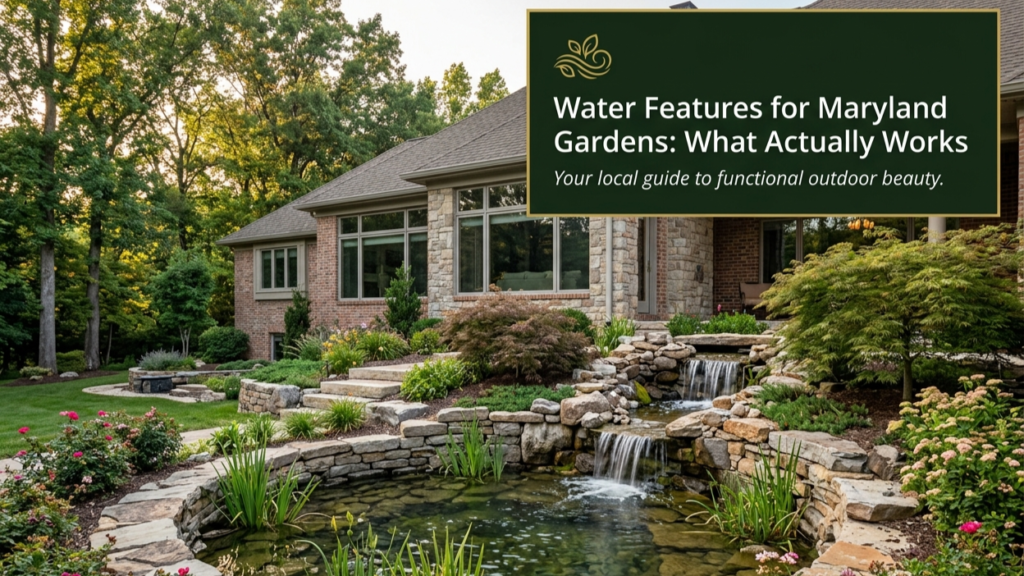
You’ve been dreaming about a backyard water feature—maybe a pond surrounded by ferns and hostas, or a small fountain you can hear from the patio. But you’ve also heard stories: pumps that freeze in winter, algae blooms by July, water features that need constant maintenance.
Here in Maryland, we get all four seasons—and that means freeze/thaw cycles, humid summers, falling leaves in autumn, and ice in January. A water feature that works beautifully in Arizona or Georgia might be a nightmare here. You don’t want to invest thousands only to drain it every October or spend weekends scrubbing algae.
The good news? With the right design and plant selection, water features absolutely thrive in Maryland gardens. You just need to know what works in our climate—and design around it from day one.
In this guide, we’ll walk through the water features that hold up in Harford and Baltimore Counties, what to avoid, and how to plan a feature that looks great and stays low-maintenance year-round.
Why Maryland’s Climate Matters for Water Features
Maryland sits in USDA Zone 6b–7a with cold winters, hot summers, and high humidity—all of which affect how water features perform.
Our winters bring temperatures down into the teens, sometimes single digits. That means ice formation and freeze/thaw cycles that can crack poorly designed features or damage pumps. A pond that’s too shallow will freeze solid, killing plants and stressing fish.
Summer is the opposite problem. Heat and humidity create perfect conditions for algae blooms. Add in full sun exposure, and you’ve got green water by mid-July if you haven’t planned for filtration and circulation.
Fall brings another challenge: leaves. Oaks, maples, and tulip poplars drop thousands of leaves starting in October. If your water feature sits under tree cover without a plan for debris management, you’ll spend every weekend with a net.
Spring rainfall can be heavy and unpredictable. A water feature needs proper drainage and overflow planning, or you’ll end up with flooding around your patio or basement.
Because of these factors, some water features work beautifully here—and others are constant headaches.
Water Features That Work Best in Maryland Gardens
Not all water features are created equal. These are the types we design most often in Harford County because they hold up through all four seasons.
Naturalistic Ponds with Native Plantings
These are designed to look like they’ve always been there—not like something plopped in from a catalog. We line the edges with native grasses, ferns, irises, and cardinal flower. The plantings do double duty: they filter runoff naturally and create habitat for frogs, dragonflies, and songbirds.
A well-designed pond includes shallow “bog zones” around the perimeter where plants can root in consistently wet soil. This isn’t just pretty—it’s functional filtration that reduces algae and keeps water clearer.
Depth matters. To prevent a complete freeze in January, your pond should be at least 18–24 inches deep. Deeper is better if you want fish or year-round operation with a heater and aerator.
We often plant soft rush, blue flag iris, and swamp milkweed around pond edges—they handle wet roots in summer and die back cleanly in fall. Ostrich ferns and cardinal flower add height and movement. River birch or sweetbay magnolia planted nearby create dappled shade without dropping too much debris.
Naturalistic ponds integrate beautifully into Maryland landscapes because they work with our climate instead of fighting it.
Cascading Waterfalls & Streams
If your property has any slope, a cascading waterfall or stream is one of the best options for adding movement and sound without a large footprint.
These features recirculate water from a lower basin back to the top, so there’s no waste. Moving water resists algae better than still water, and the sound masks road noise or neighbors.
Stone placement is critical. We use natural fieldstone and boulders native to Maryland—no fake plastic rocks or overly polished stones that look out of place. The layout has to prevent splashing and erosion while looking like it formed naturally over time.
At the base, we include a small catch pond or basin. This can be planted with the same native species we use around ponds—iris, cardinal flower, soft rush—so the whole feature feels cohesive.
Why it works here: moving water stays cleaner, naturalistic stone blends with our regional landscape, and the recirculating system handles seasonal water level changes without constant adjustments.
Disappearing Fountains (Pondless Water Features)
A pondless fountain is exactly what it sounds like: water bubbles up through stone or a decorative basin, then drains into a hidden underground reservoir. You get the sight and sound of water without any standing water on the surface.
This is one of the easiest water features to maintain. No standing water means no algae blooms, no fish to overwinter, and no debris floating on the surface. It’s safer if you have young kids or pets, and it takes up less space.
Winterizing is simple—just drain the reservoir and cover the basin. In spring, refill and turn it back on.
We install these at front entries, in courtyard gardens, and on patios where homeowners want the ambiance of water without the commitment of a pond. They’re also great for smaller properties where a full pond wouldn’t fit.
Ideal for: Homeowners who want water features for Maryland gardens without the maintenance that comes with a traditional pond.
Container Water Gardens
These are the most flexible option. A large ceramic bowl, stone basin, or half whiskey barrel gets filled with water and planted with dwarf water lilies, papyrus, or floating plants like water lettuce.
They’re seasonal features—set them up in May, enjoy them through September, then drain and store them before the first freeze. Perfect for patios, decks, or small courtyards where permanent installation isn’t possible.
You’ll need to top off the water weekly during summer heat (evaporation is real in July). Mosquitoes aren’t usually a problem if you add a small fountain pump or a couple of goldfish.
Limitation: this isn’t a year-round solution. But for homeowners who want to test the water (literally) before committing to a larger project, container gardens are low-cost and low-risk.
Not sure which water feature is right for your yard? Let’s talk.
Call us at (443) 794-8108 or email eric@oakfieldlandscaping.com to schedule a free site consultation.
Water Features to Avoid (or Approach with Caution) in Maryland
Some water features look great in photos but don’t hold up well here. Here’s what we steer clients away from—and why.
Shallow Decorative Ponds
Anything under 12 inches deep will freeze solid come January. Fish can’t survive, and most aquatic plants will suffer root damage. You’ll end up draining it every fall and refilling every spring, which defeats the purpose of having a pond.
If you want a pond, go deeper. The extra excavation cost now saves you years of headaches.
Formal Geometric Fountains Without Winter Plans
Formal fountains—think tiered bowls or European-style wall fountains—can work in Maryland, but only if you’re prepared to fully winterize them. That means draining all the plumbing, removing pumps, and covering basins to prevent ice damage.
These features are beautiful, but they require more off-season effort than naturalistic designs. If you’re not up for that maintenance, choose something designed to handle freezing temps.
Koi Ponds Without Proper Depth or Aeration
Koi are gorgeous, and they absolutely can thrive in Maryland—if the pond is designed correctly. They need 3–4 feet of depth to survive winter, plus robust filtration because our summer humidity accelerates algae and bacteria growth.
Koi ponds are high-maintenance. You’re committing to regular filter cleaning, water testing, and feeding schedules. For most homeowners, a naturalistic pond with native plantings and maybe a few goldfish is a better fit.
We can design koi ponds, but only when clients understand the commitment. If you want the look of a pond with less work, stick with goldfish or go fish-free.
Designing a Water Feature Around Maryland’s Seasons
A water feature should be designed with all four seasons in mind—not just how it looks in June.
Spring: Managing Runoff and Debris
Spring in Maryland means heavy rains and pollen. Your water feature needs to handle drainage during those April downpours without overflowing onto your patio or into your basement.
We design overflow channels and grade the surrounding area so excess water flows away safely. Skimmers or easy-access clean-out points make it simple to remove pollen and early-season debris before it sinks and decomposes.
Plant selection matters too. Early bloomers like marsh marigold add color in April and May, right when you’re starting to spend time outside again.
Summer: Algae Control and Evaporation
Summer heat and humidity are prime conditions for algae. You’ll see string algae on rocks or green water if circulation and filtration aren’t sized correctly for our climate.
Shade helps. Planting tall grasses or positioning your feature under dappled tree cover reduces direct sun exposure. Moving water—whether it’s a waterfall, fountain, or circulating pump—keeps oxygen levels up and algae growth down.
Beneficial bacteria added to ponds in May and June help break down organic matter before it fuels algae blooms. Proper filtration is non-negotiable if you want clear water.
Expect to top off your feature weekly in July and August. Evaporation is highest during the dog days of summer, especially if your feature is in full sun.
Fall: Leaf Management
October and November bring falling leaves—and if your water feature sits under oaks or maples, you’ll be dealing with a lot of them. Leaves that sink and decompose create muck, reduce oxygen, and make spring cleanup ten times harder.
We recommend netting over ponds starting in early October. It’s not the prettiest look, but it saves hours of work and keeps your water healthier through winter.
If possible, we design features away from the heaviest leaf drop zones. A little strategic placement during the planning phase prevents major headaches later.
Cutting back perennials around your water feature in late fall also reduces debris. Native grasses and ferns die back naturally, and removing the dead stems keeps things tidy.
Winter: Freeze Protection
You have two options for winter: shut it down and winterize, or keep it running with a heater and aerator.
Shutting down means draining pumps and plumbing, removing filters, and covering basins. It’s straightforward but does require some effort in November and again in March when you start back up.
Keeping it running requires a pond heater (to maintain a small open area of water) and an aerator (to keep oxygen moving). This is the best option for deeper ponds with fish, and it means you can still enjoy the sight and sound of water in January.
Naturalistic designs handle freeze/thaw cycles better than formal features because there’s less rigid plumbing and no delicate fountain mechanisms to crack.
Learn more about how to integrate water, lighting, and trees into cohesive landscape designs across Harford County.
Frequently Asked Questions
Can I keep my water feature running all winter?
Yes—if it’s designed for it. You can install heaters and aerators that prevent full freeze and keep an open area of water for gas exchange. This works well for deeper ponds.
Shallow features or pondless fountains should be drained and covered. It’s easier and safer than trying to keep them running when temps drop into the teens.
How much maintenance does a water feature require?
Depends on the type. Pondless fountains are minimal—top off water every couple of weeks, check the pump once a season.
Ponds with plants require seasonal tasks: netting in fall, topping off in summer, occasional filter cleaning, cutting back dead growth in spring. We give you a seasonal checklist so you know what to expect and when.
Most of our clients spend 30 minutes a month on maintenance during the growing season, with a bit more effort in spring and fall.
Will a water feature attract mosquitoes?
Not if there’s moving water or fish. Mosquitoes only breed in still, stagnant water. A circulating pump or a handful of goldfish prevent mosquito larvae from maturing.
Container gardens without circulation can attract mosquitoes, but adding a small fountain pump solves that.
Do water features use a lot of water?
Recirculating systems reuse the same water. You’re not running a hose constantly. You will need to top off due to evaporation—more in July and August, less in cooler months—but it’s not a significant water bill increase.
A typical backyard pond might need 20–30 gallons added weekly in summer. That’s less than watering a couple of flower beds.
How do you prevent algae in Maryland’s humidity?
Shade, moving water, beneficial bacteria, and proper filtration. We design with all of these in mind.
Dappled shade from trees or tall plantings reduces direct sun. Waterfalls and fountains keep water oxygenated. Beneficial bacteria break down organic matter before it fuels algae. And correctly sized filters handle the load.
You’ll never have zero algae—it’s part of a healthy water ecosystem—but you won’t have green soup either.
Ready to Add a Water Feature That Actually Works in Maryland?
We’ve designed and installed dozens of ponds, fountains, and streams across Harford and Baltimore Counties—all built to handle our winters, summers, and everything in between.
Whether you want a naturalistic pond surrounded by native plantings, a cascading waterfall integrated into your landscape, or a low-maintenance pondless fountain, we’ll walk your property and give you a plan that fits your space, your budget, and your comfort level with maintenance.

With over 10 years of experience locally in Maryland, Oakfield Landscaping has a team of skilled professionals ready to deliver exceptional services.
Start your project
Ready to create a landscape that enhances your property and reflects your vision?
Our design process begins with an in-depth consultation:
- Walk your property and discuss your vision
- Review your functional & aesthetic preferences
- Assess existing landscape conditions
- Explain our design-installation process and timeline
- Answer your questions about our approach