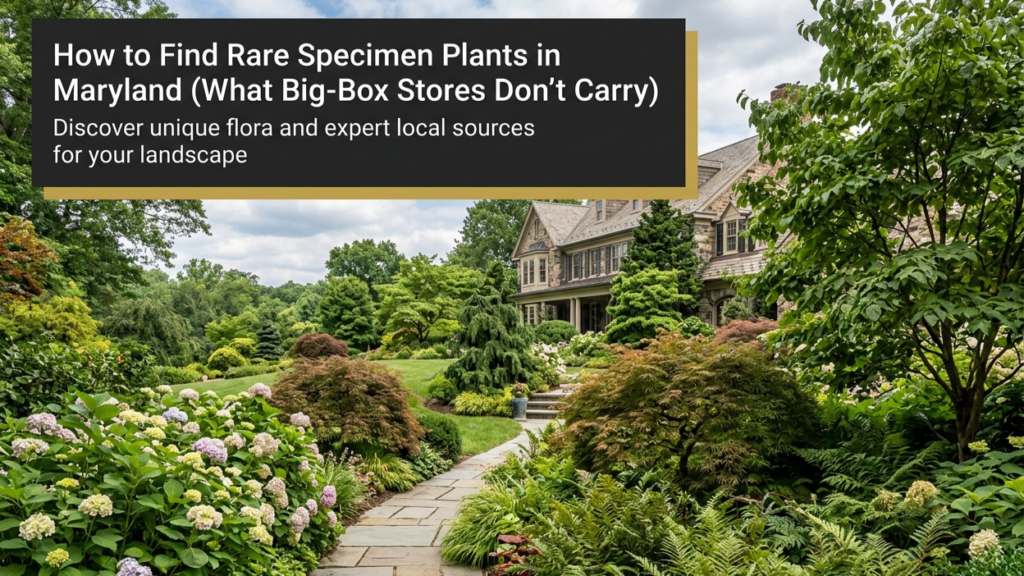
You want a landscape that stands out in your Harford County neighborhood — not the same boxwood hedges and Bradford pears everyone else has from Lowe’s.
But here’s the problem: when you walk into Home Depot or any big-box garden center, you’re seeing the same 50 plant varieties on every shelf. The same overgrown junipers. The same leggy azaleas that have been sitting in black pots under a sun shelter for months. Nothing unique. Nothing special. And half of them aren’t even well-suited to Maryland’s soil and climate.
Your property deserves better than cookie-cutter landscaping.
That’s where Oakfield Landscaping comes in. Eric works directly with specialty growers and regional nurseries across Maryland and the Mid-Atlantic to source rare specimen plants, mature trees, and unique materials that give your landscape a distinctive, high-end look. These are plants you won’t find anywhere else in Bel Air or Abingdon — plants selected specifically for your property’s conditions and your design goals.
If you’re ready to move past the garden center basics and create a landscape with real character, here’s how the process works and what makes specimen-grade plants worth the investment.
What Are Specimen Plants? (And Why They Matter for Your Maryland Landscape)
Bottom line: Specimen plants are premium-grade, carefully selected plants chosen for size, form, health, and visual impact. They become focal points in your landscape design — not just filler.
When you buy a shrub at a retail garden center, you’re getting what’s called “nursery grade.” That means it meets basic standards for the species, but it’s grown for volume and quick turnover. The goal is to get it out the door, not to cultivate a show-quality plant.
Specimen-grade plants are different. These are plants that have been grown longer, pruned and shaped for superior form, and selected for exceptional characteristics. A specimen Japanese maple, for example, might have a perfectly balanced branching structure and rich color that a standard-grade version just doesn’t have.
Here’s what makes specimen plants worth the investment:
Instant maturity. You’re not waiting five years for a tree to fill in. Specimen plants arrive with size and presence, transforming your landscape immediately.
Superior quality. These plants have been grown with more space, better nutrition, and expert care. They’re healthier, hardier, and more likely to thrive long-term.
Visual impact. Specimen plants serve as focal points — the weeping cherry in your front yard, the paperbark maple with exfoliating cinnamon bark, the mature evergreen that gives you privacy the day it’s installed.
In Harford County and Baltimore County landscapes, Eric uses specimen plants strategically. A rare cultivar of oakleaf hydrangea anchoring a shade garden. A mature river birch with striking white bark placed where you’ll see it from your kitchen window. A weeping Alaska cedar that adds year-round interest and texture.
These aren’t plants you pick up on a Saturday morning trip to the garden center. They’re sourced intentionally, selected for your specific site, and installed as part of a cohesive design.
Why You Won’t Find These Plants at Home Depot or Lowe’s
Bottom line: Big-box stores prioritize volume and turnover, not variety or quality. They stock fast-growing, generic plants that appeal to the broadest audience — not discerning homeowners who want something different.
Walk into any Lowe’s from Aberdeen to Towson, and you’ll see the same inventory. Boxwoods. Knockout roses. Leyland cypress. Hostas in three varieties. Maybe a few Japanese maples if you’re lucky, but they’ll all be the same ‘Bloodgood’ cultivar in a five-gallon pot.
There’s nothing wrong with these plants for basic landscaping. But if you’re trying to create a landscape with character and distinction, you’re working with a very limited palette.
Here’s why big-box stores can’t offer what specialty nurseries and professional landscapers can access:
Limited selection. Retail garden centers stock what sells quickly in high volume. They’re not bringing in unusual cultivars or native varieties that only a small percentage of customers will recognize.
Plant stress and poor care. Those plants have been trucked long distances, often from out of state. They sit in parking lots under inconsistent watering schedules. By the time you buy them, they’re already stressed — which affects how well they establish in your yard.
No regional specialization. Big-box buyers purchase for entire regions or even nationally. They’re not selecting plants that specifically thrive in USDA Zone 6b-7a, which is where most of Harford County falls. You might find plants that technically survive here, but won’t perform their best.
Zero expertise. The staff at big-box stores can tell you what aisle the mulch is in, but they can’t advise you on whether a particular shrub will tolerate your clay soil or which native alternatives would support local pollinators.
Professional landscapers don’t shop at Home Depot for plant material. Eric sources from wholesale growers and specialty nurseries where the selection is deeper, the quality is higher, and the plants are chosen for professional installation — not impulse purchases.
Where Oakfield Sources Rare and Specialty Plants
Bottom line: Eric works directly with specialty growers, wholesale nurseries, and regional plant brokers across Maryland, Pennsylvania, and the Mid-Atlantic to find the exact plants each design calls for.
This is where the real difference happens. When you work with Oakfield, you’re not limited to what’s sitting on a retail shelf. You have access to the same sources professional landscapers and high-end estates use.
Here’s how Eric sources plants for Harford County and Baltimore County projects:
Specialty wholesale growers. These are nurseries that grow specific types of plants — sometimes just Japanese maples, or native shrubs, or dwarf conifers. They don’t sell to the public. They grow in larger quantities and sizes than retail nurseries, with better quality control. Eric has relationships with growers throughout Maryland and into Pennsylvania who can provide everything from mature shade trees to unusual perennial varieties.
Native plant nurseries. Maryland has excellent native plant growers who specialize in species that evolved right here in the Mid-Atlantic. Serviceberry, Virginia sweetspire, oakleaf hydrangea, eastern redbud — these are plants that support local wildlife, require less maintenance once established, and look completely natural in Harford County landscapes. Eric works with these specialty growers to incorporate natives into designs where they make sense.
Regional tree farms. When a project calls for a mature tree — something that creates instant impact — Eric sources from tree farms that grow larger-caliper specimens. We’re talking about 15-foot river birch with established root systems, or 12-foot evergreens that provide immediate privacy screening. These aren’t the spindly saplings you find at garden centers.
Custom orders for specific cultivars. Sometimes a design calls for a particular plant that’s not readily available. A specific hydrangea cultivar with unique blooms. A weeping variety of Nootka cypress. A paperbark maple grown to a certain size. Eric can place custom orders through plant brokers who track down exactly what’s needed, even if it means waiting for the right planting season.
Seasonal availability. Plant sourcing follows natural growing cycles. Spring and fall are prime times for installation in Maryland, and Eric plans projects around when the best material is available. Some plants need to be ordered months in advance, especially larger specimens or unusual varieties.
Here’s what this looks like in practice: For a recent project in Bel Air, the design called for a mature specimen tree as a front yard focal point. Eric sourced a 15-foot paperbark maple from a Pennsylvania grower specializing in ornamental trees. It arrived healthy, properly balled and burlapped, and was installed with the root flare at the correct depth. That tree had the presence and character of something that’s been growing in the yard for a decade — from day one.
Transport and handling matter too. Specimen plants are investments, and they need to be treated carefully. Eric coordinates delivery timing, ensures plants aren’t sitting in trucks in hot weather, and has them installed promptly to minimize transplant shock.
You’re not just getting access to rare plants. You’re getting Eric’s expertise in selecting the right plants for Maryland conditions, his relationships with quality growers, and his commitment to proper installation.
Examples of Specialty Plants Oakfield Uses in Harford and Baltimore County Projects
Bottom line: Here are some of the unique, high-quality plants Eric sources for local landscapes — plants chosen for beauty, performance, and suitability to Maryland’s growing conditions.
This isn’t an exhaustive catalog. It’s a sampling of the kinds of plants that make Oakfield landscapes distinctive, carefully selected for how they perform in Harford County’s climate (USDA Zone 6b-7a), soil conditions, and seasonal weather patterns.
Native Specimen Trees
Serviceberry (Amelanchier). Also called Juneberry or shadblow, this native tree offers four seasons of interest: white spring flowers, edible berries that birds love, great fall color, and attractive silver-gray bark. It thrives in Maryland and works beautifully as an understory tree or small focal specimen.
Yellowwood. An underused native with a gorgeous spreading form and cascading white flower clusters in late spring. The smooth gray bark is beautiful in winter. It’s adaptable to various soil types and makes a stunning shade tree for medium-sized properties.
American Hornbeam. Also called musclewood for its distinctive smooth, sinewy bark. This native thrives in the understory and works perfectly for naturalized areas or as a privacy screen alternative to standard evergreens. Excellent fall color and tolerance for wet soil.
Ornamental & Focal Trees
Paperbark Maple. One of Eric’s go-to specimen trees for high-impact curb appeal. The exfoliating cinnamon-colored bark is stunning year-round, especially in winter. It’s a smaller tree that fits well in front yards and offers excellent fall color. You won’t find mature specimens of this at big-box stores.
Weeping varieties. Weeping Alaska cedar, weeping Nootka cypress, weeping white pine — these architectural plants add vertical interest and drama. They’re especially effective as focal points or anchoring mixed borders. Eric sources these from specialty conifer growers who’ve trained them for superior form.
Japanese Maples (beyond the basics). Sure, you can find ‘Bloodgood’ at any garden center. But Eric sources unusual cultivars with different leaf shapes, colors, and growth habits. Coral bark varieties for winter interest. Laceleaf forms with deeply dissected foliage. Dwarf varieties for smaller spaces. These are selected from growers who specialize in Japanese maples and can provide mature, well-formed specimens.
Rare Shrubs & Perennials
Oakleaf Hydrangea (native cultivars). This Maryland native offers huge flower panicles, excellent fall color, and exfoliating bark. Specialty growers offer improved cultivars with better flower size or more compact growth habits than the straight species. Perfect for shade gardens in Harford County.
Summersweet (Clethra). A native shrub that blooms in mid to late summer when most shrubs are done flowering. Fragrant white or pink flower spikes that attract pollinators. Tolerates wet soil and shade. Eric uses this in naturalized plantings and rain gardens.
Specialty Viburnums. Beyond the standard varieties, there are dozens of viburnums with different characteristics — native species, compact forms, varieties with exceptional fall color or fruit display. Eric selects these based on site conditions and design needs.
Uncommon Hostas and Ferns. For shade gardens, Eric sources unusual hosta cultivars with distinctive leaf patterns and colors, along with native ferns that add texture and movement. These come from perennial specialists who grow hundreds of varieties, not the six types you’ll see at retail.
Mature Evergreens for Privacy
When you need screening and you need it now, Eric sources larger evergreens that provide immediate privacy. These aren’t the four-foot Leyland cypress from the garden center. We’re talking about 10 to 12-foot specimens, carefully selected for density and health, installed to create an instant privacy barrier.
The specific varieties depend on your site conditions — sun exposure, soil drainage, available space. But the key difference is size and quality. These plants come from growers who specialize in screening evergreens and can provide the mature sizes that make sense for professional installation.
All of these plants are selected with Harford County and Baltimore County conditions in mind. They’re not just beautiful — they’re proven performers in Maryland’s clay soils, temperature swings, and precipitation patterns.
What About Exotic or Non-Native Materials?
Bottom line: Oakfield can source non-native ornamental plants when they’re well-suited to Maryland’s climate and won’t become invasive. The focus is always on long-term performance and ecological responsibility.
Not every great landscape plant is native to Maryland. Japanese maples aren’t native, but they’re non-invasive, perform beautifully here, and have been grown in American landscapes for over a century. Same with many hydrangea cultivars, certain viburnums, and ornamental grasses.
Eric’s approach is balanced. Native plants are prioritized, especially for supporting pollinators, birds, and beneficial insects. But non-native ornamentals have their place when they’re chosen carefully.
What matters is avoiding invasive species that escape cultivation and damage local ecosystems. You won’t see Bradford pear, burning bush, Japanese barberry, or other known invasives in Oakfield designs. These plants might still be sold at garden centers, but responsible landscapers avoid them.
When Eric does incorporate non-native plants, they’re proven performers that won’t spread aggressively, that handle Maryland weather, and that serve a specific design purpose. The goal is creating landscapes that are beautiful, sustainable, and ecologically sound.
If you’re interested in native plantings specifically — maybe a pollinator garden or a naturalized area — Eric can source entirely from native plant nurseries. If you want a more formal design with ornamental focal points, he’ll mix natives with well-chosen non-natives.
The bottom line is this: every plant is selected intentionally, with knowledge of how it will perform long-term in your specific site conditions.
What This Means for Your Harford County Landscape
Bottom line: When you work with Oakfield, you’re not limited to what’s on a garden center shelf. You get a curated, high-quality plant palette designed specifically for your property.
Here’s what that looks like in practical terms:
Unique curb appeal. Your front yard doesn’t look like every other house on your street. You have a specimen tree with character, unusual shrubs that provide year-round interest, and a plant palette that reflects thoughtful design — not whatever was on sale at Lowe’s last weekend.
Landscapes that mature beautifully. Specimen plants are selected for long-term performance. That Japanese maple Eric installs this fall will look even better in five years, ten years, twenty years. These are investments that appreciate, not disposable plants that need replacement every few seasons.
Plants selected for Maryland conditions. Everything in your landscape is chosen to thrive in Harford County’s climate, soil, and weather patterns. That means less maintenance, fewer replacements, and better performance over time. You’re not fighting against your site conditions — you’re working with them.
Investment-grade landscaping. High-quality plant material is part of what makes a landscape valuable. When specimen plants are installed as part of a cohesive design, they add real value to your property. Mature trees, rare ornamentals, and thoughtful plant selection are things buyers notice and appreciate.
Eric’s personal involvement. You’re not dealing with a crew that shows up with a truck full of whatever plants were available that week. Eric is personally involved in plant selection for every project. He knows the growers, he inspects material before it’s delivered, and he oversees installation to make sure it’s done right.
This is what separates professional landscape design and installation from DIY garden center projects. You’re getting expertise, access, and execution that results in landscapes with real distinction.
Frequently Asked Questions
Can I request specific plants for my project?
Absolutely. If you have particular plants in mind — maybe you saw a beautiful tree at a friend’s house, or you’ve always wanted a certain type of hydrangea — let Eric know during the consultation.
He’ll advise you on whether that plant is appropriate for your site conditions and how it fits into the overall design. If it makes sense, he’ll source it. If there’s a better alternative that achieves the same goal, he’ll explain why.
This is a collaborative process. Your input matters, and Eric’s expertise ensures the final plant selection works both aesthetically and horticulturally.
Do you only use rare plants, or do you mix in common varieties?
Every landscape design is a balance. Specimen plants serve as focal points and accents, but they’re most effective when supported by a well-designed mix of other plants.
Eric might use a rare paperbark maple as the star of your front yard, but surround it with a mix of native shrubs, ornamental grasses, and perennials that complement its form and color. The supporting plants don’t need to be rare — they need to be the right plants for the design.
The goal isn’t to make every plant exotic. The goal is to create a cohesive, beautiful landscape where specimen plants shine and everything else supports the overall composition.
How long does it take to source specialty materials?
For most projects, plan on a few weeks to a couple of months from design approval to installation. Spring and fall are the busiest planting seasons, so scheduling in advance is smart.
For very specific or rare plants, especially larger specimens, it can take longer — sometimes ordering for the next planting season. Eric will let you know upfront what the timeline looks like based on your plant selections.
The advantage of planning ahead is you get exactly the right plants at the right time, rather than settling for whatever’s available immediately.
Do these plants require special maintenance?
Most specialty plants, once established, don’t require more maintenance than standard landscape plants. The first growing season is critical — consistent watering, monitoring for stress, and protecting from deer if needed.
After that, maintenance depends on the specific plants. Some specimen trees need minimal care. Certain shrubs benefit from annual pruning to maintain their form.
Oakfield offers maintenance services for clients who want professional care year-round. Eric can also provide guidance if you prefer to handle maintenance yourself. The key is understanding what each plant needs and providing it consistently.
Ready to Design a Landscape That Stands Out?
Bottom line: If you’re tired of seeing the same plants in every yard and want a landscape with character, depth, and long-term beauty, let’s talk.
Oakfield’s access to specialty growers and rare plant material means your Harford County or Baltimore County landscape doesn’t have to look like everyone else’s. You get Eric’s expertise in plant selection, his relationships with quality sources, and his commitment to installing everything correctly so it thrives.
Whether you’re looking for a mature specimen tree to anchor your front yard, native plants to support local wildlife, or unusual shrubs and perennials that add distinction to your beds, Oakfield can source and install exactly what your property needs.
Schedule a consultation to discuss your project. Eric will walk your property, listen to your goals, and develop a design that incorporates the right plants for your site — including specialty materials you won’t find anywhere else.
Call or text: (443) 794-8108
Email: eric@oakfieldlandscaping.com
Hours: Monday–Friday, 8AM–4PM
Oakfield Landscaping serves Bel Air, Abingdon, Aberdeen, and surrounding areas throughout Harford County and Baltimore County, Maryland.
Want to learn more about the full design and installation process? Check out the complete landscape design and installation guide for Harford County to see how everything comes together — from initial consultation to final installation and beyond.
Your property deserves more than big-box basics. Let’s create something distinctive.

With over 10 years of experience locally in Maryland, Oakfield Landscaping has a team of skilled professionals ready to deliver exceptional services.
Start your project
Ready to create a landscape that enhances your property and reflects your vision?
Our design process begins with an in-depth consultation:
- Walk your property and discuss your vision
- Review your functional & aesthetic preferences
- Assess existing landscape conditions
- Explain our design-installation process and timeline
- Answer your questions about our approach