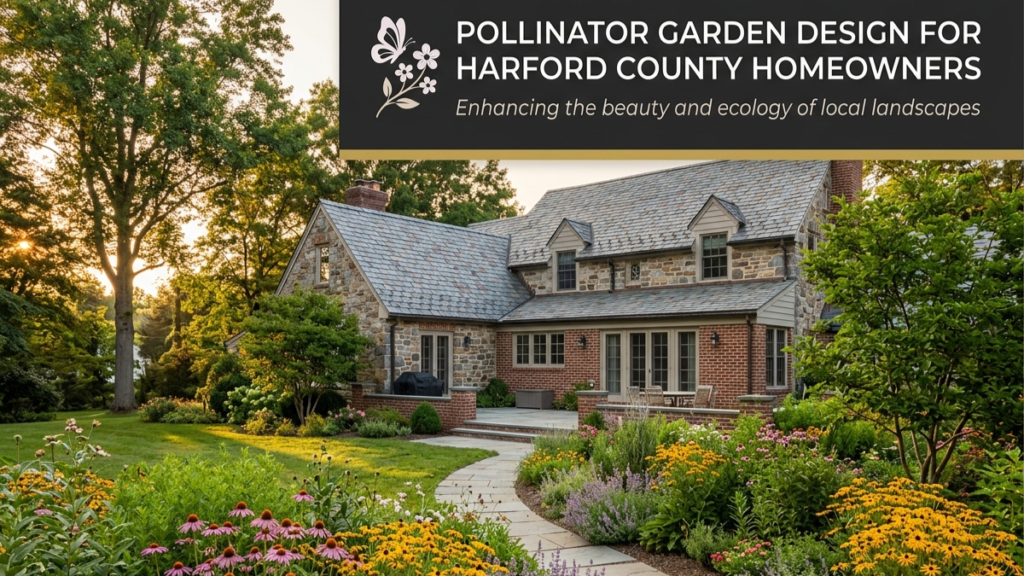
You want a landscape that looks beautiful, supports local wildlife, and doesn’t demand constant attention. But most traditional landscaping relies on non-native plants that need heavy watering, fertilizing, and pruning — and offer little to the bees, butterflies, and hummingbirds that used to fill Maryland backyards.
Non-native ornamentals might look tidy at the garden center, but they often struggle in Maryland’s clay soil and humid summers. They demand weekend after weekend of maintenance — deadheading, treating for pests, supplemental watering during dry spells. Meanwhile, pollinator populations are declining across the state, and your yard could be part of the solution without sacrificing curb appeal or adding to your weekend to-do list.
A professionally designed pollinator garden uses native Maryland plants that thrive in Harford County’s growing conditions, attract butterflies and bees, and require far less maintenance than traditional landscaping. Oakfield Landscaping specializes in pollinator-friendly design that’s as beautiful as it is beneficial — gardens that look intentional and elegant from day one, and get better every year.
Call (443) 794-8108 or email eric@oakfieldlandscaping.com to schedule a consultation.
What Is a Pollinator Garden?
A pollinator garden is a landscape designed with native plants that provide nectar, pollen, and habitat for bees, butterflies, hummingbirds, and other beneficial insects.
Unlike traditional ornamental beds filled with imported shrubs and annuals, pollinator gardens focus on plants that evolved alongside local wildlife. These gardens don’t just look pretty — they serve a purpose. They feed the insects that pollinate our food crops, support bird populations (many birds feed insects to their young), and create healthier, more resilient ecosystems right in your backyard.
The best part? Pollinator gardens aren’t wild meadows that look unkempt. When professionally designed, they’re structured, layered, and beautiful. You get vibrant color from spring through fall, interesting textures and foliage, and the added bonus of watching butterflies and hummingbirds visit your property all season long.
Think of it as smarter landscaping — plants that work with Maryland’s climate instead of against it, and a yard that requires less of your time while delivering more visual impact.
Why Pollinator Gardens Work So Well in Maryland
Maryland’s native plants evolved alongside local pollinators over thousands of years, so they require less water, tolerate our clay soil, and provide exactly what butterflies and bees need to thrive.
Harford County sits in USDA Hardiness Zones 6b to 7a. That means cold winters, hot and humid summers, and soil that’s often heavy clay with drainage challenges. Most big-box garden center plants are bred for appearance and fast growth, not for Maryland’s specific conditions. They struggle in our soil, need constant feeding and watering, and often succumb to disease or pest pressure.
Native plants, on the other hand, are already adapted. Their deep root systems handle drought better once established. They resist local pests naturally because they’ve evolved defenses over millennia. They don’t need synthetic fertilizers because they’re designed to thrive in our native soil composition.
From a pollinator perspective, native plants offer the right bloom times, the right nectar composition, and the right pollen structure for our local bee and butterfly species. A butterfly that’s native to Maryland can’t always use nectar from a plant that’s native to China or Europe — the evolutionary relationship just isn’t there.
At Oakfield, we source specialty native varieties from growers who focus on regionally appropriate plants. You won’t find these at a big-box store. We’re talking about plants selected for their performance in Maryland landscapes, not just their shelf appeal.
Native Pollinator Plants That Thrive in Harford County
These Maryland natives attract pollinators, look stunning in residential landscapes, and require minimal care once established.
Spring Bloomers
Spring is when your garden wakes up — and when early-season pollinators need food most.
Virginia Bluebells (Mertensia virginica) produce clouds of soft blue flowers in April and May. They’re perfect for shady areas under existing trees, and they pair beautifully with spring bulbs. They go dormant by summer, so plant them with ferns or hostas that will fill in later.
Wild Columbine (Aquilegia canadensis) offers delicate red-and-yellow flowers that hummingbirds can’t resist. It handles part shade and looks at home in woodland edges or rock gardens.
Eastern Redbud (Cercis canadensis) is a small native tree that explodes with pink-purple blooms before its leaves emerge. The flowers feed early bees, and the tree provides structure and shade. It works in both residential front yards and naturalized backyard areas.
These early bloomers set the tone for the season and make sure pollinators have food as soon as they emerge from winter.
Summer Showstoppers
Summer is when pollinator gardens really shine — bold colors, constant movement, and waves of blooms that keep feeding bees and butterflies through the hottest months.
Purple Coneflower (Echinacea purpurea) is the backbone of Maryland pollinator gardens. Big pink-purple blooms with spiky orange centers attract everything from native bees to swallowtail butterflies. They bloom for weeks, handle full sun and part shade, and their seed heads feed goldfinches in fall and winter.
Black-eyed Susan (Rudbeckia hirta) is Maryland’s state flower, and for good reason. Bright yellow petals with dark centers create bold drifts of color from July into September. They tolerate heat, drought, and clay soil, and they self-seed gently to fill in gaps over time.
Swamp Milkweed (Asclepias incarnata) produces clusters of fragrant pink flowers that Monarch butterflies depend on. Monarchs lay their eggs exclusively on milkweed species — the caterpillars can’t survive on anything else. Swamp Milkweed handles a range of soil moisture levels, so it works in both average garden beds and slightly damp areas.
Bee Balm (Monarda didyma) offers shaggy red, pink, or purple blooms that hummingbirds visit constantly. The foliage has a minty scent, and the plant forms nice clumps that fill in quickly. It prefers afternoon shade in hot summers and benefits from good air circulation to prevent mildew.
These summer bloomers create the “wow” factor that makes your neighbors stop and ask what you planted.
Fall & Late-Season Nectar Sources
As summer fades, most gardens lose their color. Pollinator gardens keep going — and late-season nectar is critical for Monarch butterflies migrating south and bees stocking their hives for winter.
New England Aster (Symphyotrichum novae-angliae) explodes with purple, pink, or white daisy-like flowers in September and October. It provides massive amounts of nectar when little else is blooming. The plants can get tall (3–5 feet), so use them in the back of borders or in naturalized areas.
Goldenrod (Solidago species) gets a bad reputation because people confuse it with ragweed (which causes allergies — goldenrod doesn’t). Goldenrod’s bright yellow plumes feed dozens of native bee species in fall. It’s tough, drought-tolerant, and works in both formal borders and meadow-style plantings.
Joe-Pye Weed (Eutrochium purpureum) is a tall, architectural plant with dusty pink flower clusters that attract swallowtails and Monarchs. It can reach 6–7 feet, making it perfect for the back of large borders or as a naturalized screen. Despite the name, it’s not weedy — it’s stately and well-behaved.
These fall bloomers extend your garden’s season and give pollinators the fuel they need before winter.
Host Plants for Butterfly Larvae
Butterflies need two things: nectar for adults and host plants for caterpillars. Without host plants, butterflies can’t complete their lifecycle in your yard.
Milkweed (Asclepias species) is the only host plant for Monarch butterflies. Common Milkweed (A. syriaca) and Swamp Milkweed (A. incarnata) both work well in Harford County. Plant them in groups so Monarchs can lay eggs and caterpillars have enough food.
Spicebush (Lindera benzoin) is a native shrub with fragrant leaves and small yellow flowers in early spring. It’s the host plant for Spicebush Swallowtail butterflies. It tolerates shade and works beautifully as an understory plant.
Oak Trees (Quercus species) might seem like an odd choice for a pollinator garden, but they host hundreds of native moth and butterfly species. If you’re planning tree additions, native oaks provide shade, structure, and habitat for an entire web of pollinators and the birds that feed on them.
Host plants might get a little chewed on — that’s the point. We design around that by placing them where a few nibbled leaves won’t detract from the overall look.
How to Design a Pollinator Garden in Maryland
A successful pollinator garden balances beauty, seasonal interest, and plant diversity — and fits naturally into your property’s overall landscape.
Start With Sun Exposure and Soil Conditions
Most pollinator plants need at least six hours of direct sun to bloom well. Before we design anything, we evaluate your site’s sun exposure throughout the day. South- and west-facing beds get the most sun and heat. East-facing beds get gentler morning sun. North-facing beds might only work for shade-tolerant natives like Wild Ginger or Woodland Phlox.
Maryland’s clay soil is dense, slow-draining, and nutrient-rich but compacted. Native plants handle it far better than imports, but we still amend soil at planting time to give roots a strong start. We incorporate compost, break up compacted layers, and ensure proper drainage so plants don’t sit in standing water after heavy rain.
At Oakfield, we walk your property and assess all of this during the initial consultation. We’re not designing from a template — we’re designing for your specific yard, your soil, your sun, and your vision.
Layer Plants by Height and Bloom Time
Good design means something is blooming from April through October, and the garden looks balanced even when nothing’s flowering.
We layer plants by height: taller varieties like Joe-Pye Weed or Swamp Milkweed in the back (or center, if the bed is viewed from all sides), mid-height plants like Coneflower and Black-eyed Susan in the middle, and shorter plants like Wild Columbine or native sedges along the edges.
Bloom succession is just as important. If everything blooms in June, your garden will be spectacular for three weeks and boring the rest of the year. We stagger bloom times so there’s always color and always food for pollinators. Spring bulbs and early natives, summer perennials, and fall asters create a continuous show.
Even when plants aren’t blooming, foliage matters. We mix textures — spiky grasses, broad-leafed perennials, fine-textured groundcovers — so the garden has visual interest year-round.
Group Plants in Drifts, Not Singles
Pollinators are more attracted to large patches of the same flower than to single specimens scattered around. A drift of seven Coneflowers is more effective (and more beautiful) than seven different plants in seven different spots.
We design in odd-numbered groups — three, five, seven — and repeat those groupings throughout the bed. Repetition creates visual cohesion. It makes the garden feel intentional, not random.
This also makes maintenance easier. You learn the growth habit of each plant, and you know what to expect as the season progresses.
Integrate With the Rest of Your Landscape
Pollinator gardens don’t have to look “wild” or unkempt. They don’t have to take over your entire yard. We design pollinator plantings that complement upscale, manicured landscapes.
You might have a front yard foundation bed filled with native shrubs and perennials that attract pollinators while framing your home beautifully. Or a backyard border that provides privacy with native evergreens and flowering perennials. Or a garden bed near your patio where you can watch hummingbirds visit Bee Balm while you’re grilling dinner.
Pollinator gardens fit into your lifestyle. At Oakfield, we design them to match your home’s style, your curb appeal goals, and your maintenance preferences. They’re not an all-or-nothing proposition — they’re another layer of beauty and function in your landscape.
Pollinator-Friendly Landscaping for Harford County Homeowners
You don’t need to convert your entire yard into a meadow. Oakfield designs pollinator gardens that fit your lifestyle, aesthetic preferences, and maintenance goals.
Most of our clients want a blend: a well-maintained lawn for kids and dogs, structured plantings for curb appeal, and pollinator-friendly areas that attract butterflies and reduce maintenance. That’s exactly what we deliver.
A pollinator garden can be as simple as replacing a tired foundation planting with native shrubs and perennials. Or adding a border along your driveway that blooms all summer. Or creating a naturalized area at the edge of your property where you don’t want to mow.
We’ve designed pollinator gardens for front yards in Bel Air that look polished and elegant, backyard privacy borders in Abingdon that block neighbors’ views while feeding hummingbirds, and estate-scale landscapes in Harford County that integrate pollinator plantings with water features and mature tree installations.
Our design-install process means one team handles your project from concept to completion. Eric designs it, and the same crew that works with him every day installs it. No miscommunication. No surprises. No handoff between a designer who doesn’t know plants and an installer who doesn’t understand design.
If you want a landscape that’s beautiful, ecologically smart, and easier to maintain, a pollinator garden designed by Oakfield delivers all three.
Maintenance: What to Expect With a Pollinator Garden
Pollinator gardens require less maintenance than traditional landscapes once established — but they’re not zero-maintenance, especially in the first year.
First-Year Care
The first growing season is about establishment. Native perennials focus on root growth their first year, so they might not look as full or bloom as heavily as they will in year two.
You’ll need to water regularly — about an inch per week, either from rain or irrigation — to help roots establish. We mulch all beds at installation to retain moisture and suppress weeds. You’ll still see some weeds that first season, especially if we’ve amended the soil (weed seeds love disturbed soil). Pull them or spot-treat them before they set seed.
Monitor your plants. If something’s struggling, let us know. We want to catch issues early, and we’ll work with you to make sure everything thrives.
Ongoing Seasonal Maintenance
Spring is cleanup time. In late March or early April (after the coldest weather has passed), cut back last year’s dead stems to make room for new growth. We leave stems standing over winter because many native bees overwinter in hollow plant stems, and seed heads feed birds. Cutting back in spring supports both your plants and the wildlife that depend on them.
Add a fresh layer of mulch if needed, and top-dress with compost if your soil could use a boost. That’s about it.
Summer maintenance is minimal. Most natives handle Maryland’s heat and humidity once their roots are down. You might water during extended droughts, but not every week like you would with non-native ornamentals. Deadheading (removing spent flowers) can extend bloom times for some plants, but it’s optional. Many natives look just as good when they go to seed.
Fall is when pollinator gardens earn their “low-maintenance” reputation. While your neighbors are cutting back spent annuals and wrestling with ornamental grasses, you’re watching goldfinches feed on Coneflower seed heads and late butterflies visiting asters. Leave everything standing until spring. The garden feeds wildlife all winter and looks beautiful in frost.
If you’d rather not handle seasonal maintenance yourself, Oakfield offers maintenance programs tailored to native plantings. We know what to cut, when to cut it, and how to keep pollinator gardens looking their best without interfering with the wildlife they support.
Less Work Than Traditional Landscaping
Once established, pollinator gardens require no fertilizers and no pesticides. The plants are adapted to Maryland’s soil and pest pressures. Deep root systems mean you’re not dragging hoses around every week. Native plants resist diseases that plague non-native ornamentals.
You’ll spend less time maintaining a pollinator garden than you would a traditional perennial bed — and you’ll enjoy it more because there’s always something happening. Butterflies, bees, hummingbirds, goldfinches. Your garden becomes a living, dynamic space, not just a static backdrop.
Why Hire a Professional for Pollinator Garden Design?
A professionally designed pollinator garden looks beautiful from day one and matures into a showpiece — while a DIY approach often results in uneven growth, poor plant choices, and frustration.
Plant selection is more complicated than picking natives off a list. Some natives get too tall for residential beds. Some spread aggressively. Some need specific moisture levels or bloom times that don’t fit your design goals. At Oakfield, we source specialty varieties bred for garden performance — compact forms, longer bloom times, better disease resistance — that you won’t find at a big-box store.
Site-specific design matters. Where does water drain after a storm? Which areas get afternoon sun in July? What sight lines matter from your windows or patio? We evaluate all of this before we choose a single plant.
Installation quality makes or breaks a garden’s long-term success. Proper soil prep, correct planting depth, appropriate spacing for mature size — these details determine whether your garden thrives or struggles. We’ve installed hundreds of pollinator gardens in Harford and Baltimore Counties. We know what works here.
Design coherence separates a beautiful garden from a random collection of plants. We layer heights, stagger bloom times, repeat plant groupings, and integrate your pollinator garden with your home’s architecture and the rest of your landscape. The result looks intentional and elegant, not like you dumped a seed packet in the yard and hoped for the best.
Projects typically take six to twelve weeks from initial consultation to installation, depending on size and complexity. Eric is personally involved in every project — from the site visit to the final walkthrough. You’re not handed off to a crew that’s never met you. You’re working with someone who knows Maryland plants, understands your vision, and takes pride in delivering landscapes that get better every year.
Pollinator Gardens + Other Oakfield Services
Pollinator plantings work beautifully alongside water features, landscape lighting, and mature tree installations for a complete, cohesive design.
A naturalistic stream or pond complements a pollinator garden by adding movement, sound, and habitat for frogs and dragonflies. Water features attract birds and provide drinking sources for butterflies. Integrating a small waterfall or bubbling rock with native plantings creates a backyard retreat that feels miles away from suburban Maryland.
Landscape lighting extends your enjoyment of the garden into the evening. Uplighting a mature Eastern Redbud or a stand of ornamental grasses adds drama and depth. Accent lighting on garden beds highlights textures and colors you’d miss after sunset.
Mature tree installations give your garden structure and vertical interest. Native shade trees like Red Oak or Tulip Poplar host hundreds of native moth species (which feed baby birds). Ornamental natives like Serviceberry or Flowering Dogwood add spring blooms and fall color while supporting pollinators.
For larger properties, we design estate-scale pollinator landscapes that integrate with patios, outdoor kitchens, privacy plantings, and water features. These projects combine beauty, function, and ecology at a scale that transforms your entire property. Learn more in our Complete 2026 Guide to Luxury and Estate Landscaping in Harford County, Maryland.
Frequently Asked Questions About Pollinator Gardens in Maryland
Quick answers to common questions from Harford County homeowners.
Do pollinator gardens look messy?
No — when professionally designed, they look intentional, layered, and beautiful.
The “messy meadow” stereotype comes from poorly planned DIY projects or abandoned gardens. A professionally designed pollinator garden has structure, seasonal interest, and intentional plant placement. Strategic use of native ornamental grasses, evergreen shrubs, and groupings of perennials keeps the garden looking polished year-round.
Leaving stems standing over winter might look different from traditional landscaping, but it doesn’t look messy. Seed heads catch snow and frost beautifully, and you’re feeding birds all winter. In spring, you cut everything back and the cycle starts again.
Will a pollinator garden attract bees to my patio?
Bees are generally not aggressive and are focused on flowers, not people.
Native bees (like bumblebees, mason bees, and sweat bees) are far less aggressive than honeybees or wasps. They’re visiting flowers for nectar and pollen, not looking for your lemonade. Most native bees can’t even sting, and those that can rarely do unless physically threatened.
If you’re concerned, we place high-nectar plants away from high-traffic areas like patios and walkways. A pollinator border along your property line or at the edge of your lawn provides plenty of food for bees without putting them in your entertaining space.
Can I have a pollinator garden and a lawn?
Absolutely — most homeowners blend lawn areas with pollinator borders and garden beds.
You don’t have to choose between a functional lawn and a pollinator garden. The two work beautifully together. Lawn for play space, entertaining, and open sight lines; pollinator gardens for color, curb appeal, and wildlife habitat. We design borders and island beds that integrate seamlessly with existing lawns.
Many clients start with a small pollinator bed and expand over time as they see how much easier it is to maintain than traditional landscaping.
How long does it take for a pollinator garden to look full?
Many natives bloom in their first year, but full maturity and peak impact typically happen in years two and three.
Native perennials put energy into root growth their first year. By year two, they’re fuller, bloom more heavily, and start filling in spaces. By year three, your garden looks established and mature.
At Oakfield, we design for both immediate beauty and long-term growth. We space plants appropriately so they’re not crowded at maturity, but we also include enough plants that the garden doesn’t look sparse on install day. You get an attractive garden the day we finish, and it gets better every year.
Do I need to water a pollinator garden?
Regular watering the first year helps roots establish. After that, you’ll water minimally except during extreme drought.
First-year watering is about establishment, not long-term dependence. Once native plants develop deep root systems, they handle Maryland’s weather patterns without weekly irrigation. You might give them a deep watering during a two-week dry spell in July, but that’s it.
Traditional perennial beds demand constant watering. Pollinator gardens don’t. That’s one of the biggest maintenance advantages.
Ready to Create Your Pollinator Garden in Harford County?
Oakfield Landscaping designs and installs pollinator gardens that are beautiful, low-maintenance, and built to thrive in Maryland’s climate.
Native plants that attract butterflies, bees, and hummingbirds. Professional design that looks elegant and intentional. Installation quality that sets your garden up for long-term success. And a local team with over 60 five-star Google reviews and a reputation for doing what we say we’ll do.
Eric is personally involved in every project. You’ll work with someone who knows Maryland plants, understands Harford County’s soil and climate, and takes pride in creating landscapes that mature beautifully over time.
Whether you want a small front-yard border or an estate-scale pollinator landscape, we’ll design a plan that fits your property, your budget, and your vision.
Call (443) 794-8108 or email eric@oakfieldlandscaping.com to schedule your consultation.
Oakfield Landscaping serves Harford County and Baltimore County, including Bel Air, Abingdon, Aberdeen, and surrounding areas. Let’s create a pollinator garden that’s as beautiful as it is beneficial — and easier to maintain than what you have now.

With over 10 years of experience locally in Maryland, Oakfield Landscaping has a team of skilled professionals ready to deliver exceptional services.
Start your project
Ready to create a landscape that enhances your property and reflects your vision?
Our design process begins with an in-depth consultation:
- Walk your property and discuss your vision
- Review your functional & aesthetic preferences
- Assess existing landscape conditions
- Explain our design-installation process and timeline
- Answer your questions about our approach