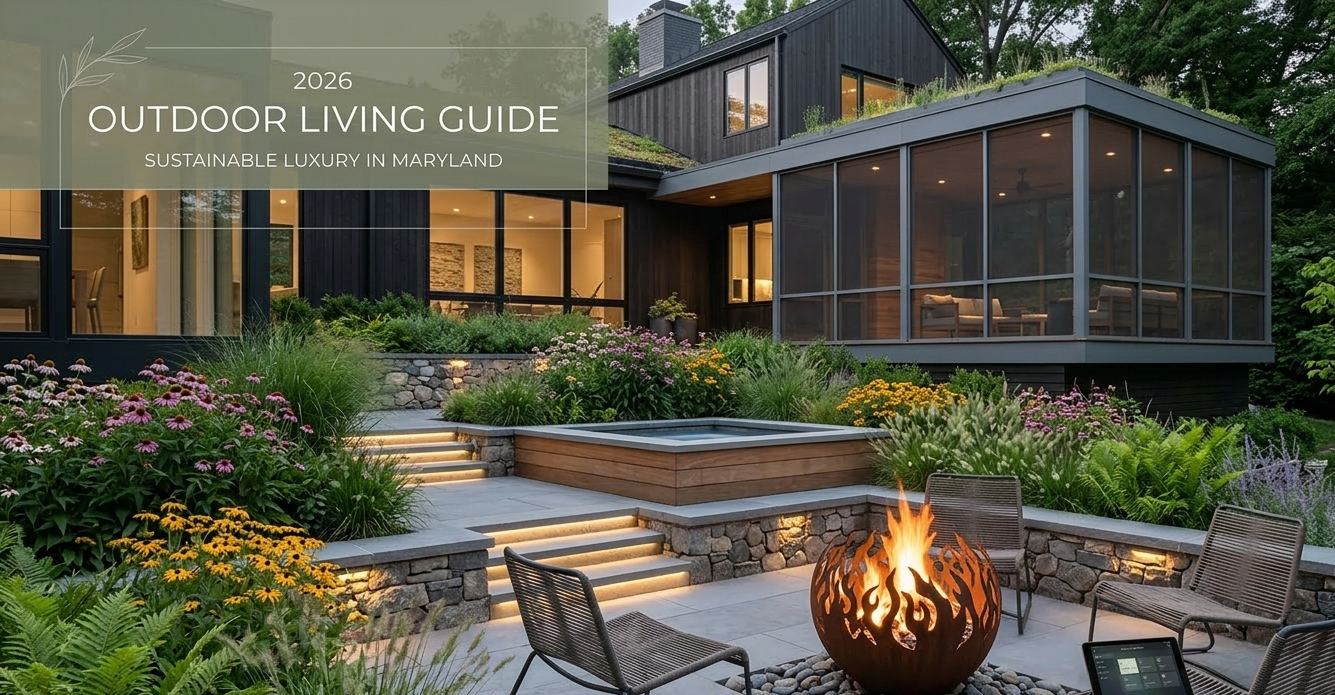
Outdoor Living Inspiration for Luxury Homes
Creating an outdoor living environment that reflects your lifestyle, complements your home’s architecture, and offers year-round beauty requires thoughtful design, skilled execution, and a clear vision. Whether you’re drawn to intimate gathering spaces framed by evergreen plantings, outdoor rooms that feel like extensions of your interior, or water features that introduce movement and calm, luxury outdoor living design transforms backyards into refined, functional environments.
This page explores the elements, approaches, and design considerations that define high-end outdoor living spaces—offering inspiration for homeowners who want more than a standard patio or fire pit.
Luxury Outdoor Living Design Ideas
Luxury outdoor living isn’t defined by square footage or budget alone. It’s shaped by the quality of materials, the integration of landscape and hardscape, the coherence of design intent, and the attention to how people move through and experience the space.
High-end outdoor living design ideas often include:
- Outdoor kitchens and dining areas anchored by natural stone, integrated lighting, and planting beds that soften edges and add seasonal color
- Fire features positioned to create focal points while supporting conversation, warmth, and evening use
- Covered structures such as pergolas, pavilions, or loggias that provide shade, define rooms, and extend usability across seasons
- Multi-level terraces that respond to grade changes, create visual interest, and allow for distinct zones without feeling fragmented
- Water features ranging from reflecting pools to naturalistic streams, chosen for sound, scale, and the way they interact with light
These elements work best when coordinated from the earliest design phase—not added afterward as isolated features. Luxury outdoor living projects succeed when every decision supports a unified vision.
Outdoor Living Spaces Designed for Comfort, Flow, and Atmosphere
The most compelling outdoor living spaces aren’t just visually striking—they’re comfortable, intuitive to navigate, and layered with atmosphere. This requires designing for human experience, not just aesthetic appeal.
Flow matters. Pathways should feel natural, transitions between spaces should be clear without being abrupt, and seating areas should invite use rather than exist as decorative gestures. Comfort depends on shelter from wind, thoughtful sun exposure, proximity to amenities, and furnishings that suit the space’s purpose.
Atmosphere is built through lighting, sound, texture, and the interplay of enclosure and openness. It’s what makes a space feel intentional rather than assembled.
Landscape Lighting for Ambiance, Safety, and Evening Use
Lighting transforms outdoor living spaces after dark—extending usability, highlighting design features, and creating mood. In luxury outdoor environments, lighting is integrated into the design from the beginning, not retrofitted with generic fixtures.
Effective outdoor lighting design includes path lighting for safe navigation, uplighting to accent trees and architectural elements, downlighting from pergolas or overhead structures for task areas, and ambient lighting that defines gathering spaces without overpowering them. Fixtures should be durable, appropriately scaled, and positioned to minimize glare while maximizing effect.
The best lighting plans layer multiple types of illumination, use dimmers or zoning to allow flexibility, and consider how light interacts with materials like stone, water, and foliage. When executed well, landscape lighting doesn’t call attention to itself—it reveals the space.
Water Features That Add Movement and Calm
Water introduces a sensory dimension that few other elements can match. The sound of moving water masks ambient noise, creates a sense of privacy, and adds a layer of tranquility to outdoor living areas. Visually, water reflects light, attracts wildlife, and provides a focal point that changes with weather and season.
Luxury outdoor living projects may incorporate formal reflecting pools that mirror surrounding architecture, naturalistic streams or waterfalls integrated into existing grade and planting, fountain features that provide sound without requiring significant space, or spa and pool environments designed as destination spaces rather than recreational afterthoughts.
Water features require careful planning around circulation systems, drainage, seasonal maintenance, and visual integration with surrounding materials and plantings. The most successful installations feel inevitable—as though the water has always been part of the landscape.
Planting Design That Defines Outdoor Rooms
Plants do more than fill space or add color. In high-end outdoor living design, planting creates structure, defines boundaries, provides seasonal interest, and softens the hard edges of built elements.
Evergreen hedges and mass plantings establish walls and backdrops. Ornamental grasses and perennials introduce movement and texture. Trees provide canopy, shade, and vertical scale. Seasonal color through bulbs, annuals, and flowering shrubs adds variety without undermining the overall composition.
Thoughtful planting design considers mature size, maintenance requirements, seasonal performance, and how plants interact with lighting, hardscape materials, and views from interior spaces. The goal is a cohesive palette that feels curated, not crowded—where each plant serves a purpose within the larger design.
Backyard Transformations Through Thoughtful Outdoor Living Design
Many luxury outdoor living projects begin with backyards that are underutilized, poorly graded, or disconnected from the home. Transformation happens through design that addresses existing conditions while establishing a clear vision for how the space should function and feel.
This might involve regrading to create level terraces, installing retaining walls to manage slope and define zones, introducing stairs or pathways that improve circulation, selecting materials that complement the home’s architecture and withstand Maryland’s climate, or integrating plantings that provide privacy, screen undesirable views, and establish a sense of enclosure.
Successful transformations don’t erase a site’s character—they work with topography, existing trees, sun exposure, and views to create outdoor living environments that feel rooted in place. The result is a backyard that functions as a true extension of the home, not an afterthought.
Elements That Shape High-End Outdoor Living Environments
Luxury outdoor living spaces are defined by careful selection and integration of design elements that work together to create atmosphere, support function, and deliver long-term performance. These elements extend beyond materials and structures to include sensory qualities, spatial relationships, and seasonal considerations.
Lighting, Texture, and Seasonal Interest
High-end outdoor living design layers visual and tactile qualities that evolve throughout the year. Texture comes from the interplay of smooth-cut stone and rough-hewn wood, fine-textured groundcovers and bold-leaved perennials, reflective water surfaces and matte metal finishes. These contrasts add depth and prevent monotony.
Seasonal interest ensures the space remains engaging year-round. Spring bulbs and flowering trees, summer perennials and lush foliage, fall color and ornamental grasses, winter structure from evergreens and architectural plants—each season brings a different character. Lighting extends this interest into evening hours, revealing forms and shadows that aren’t visible during the day.
Sound, Privacy, and Visual Balance
Sound management is often overlooked but essential. Water features, rustling grasses, and strategically placed evergreens can buffer street noise or neighboring activity. Privacy comes through layered plantings, thoughtfully positioned structures, and grade changes that create natural screening without feeling fortress-like.
Visual balance involves distributing mass, height, and focal points in ways that feel harmonious from multiple vantage points—both within the outdoor space and from interior rooms. This requires considering sightlines, framing views, and avoiding compositions that feel one-sided or cluttered.
Outdoor Living Design Projects Across Maryland
Maryland’s climate, topography, and architectural diversity influence outdoor living design in specific ways. Projects in Potomac, Bethesda, McLean, and surrounding areas navigate hilly terrain, work with mature tree canopies, and respond to homeowners who value craftsmanship, longevity, and design integrity.
Regional considerations include selecting materials that perform well through freeze-thaw cycles, designing drainage systems that handle heavy rain events, choosing plants suited to Maryland’s USDA Zone 7 climate, and integrating outdoor living spaces with home styles ranging from traditional brick colonials to modern glass-and-steel designs.
Local expertise matters—understanding how water moves through different soil types, knowing which stone suppliers deliver consistent quality, and coordinating with the trades necessary for complex installations. High-end outdoor living projects benefit from designers and builders who are deeply familiar with the region’s conditions and expectations.
From Inspiration to a Cohesive Outdoor Living Plan
Turning inspiration into a realized outdoor living environment requires translating ideas into a comprehensive plan that addresses site conditions, functional requirements, aesthetic preferences, and long-term performance.
This process typically involves site analysis to understand topography, drainage, sun exposure, and existing features; concept development that explores spatial organization, material palettes, and key design elements; design refinement through renderings, elevations, and detailed drawings; and coordination with specialists in hardscape construction, landscape installation, lighting, water features, and plantings.
A cohesive plan ensures that individual elements support a unified vision, sequencing and phasing are logical and efficient, materials and plants are specified for quality and compatibility, and the final result functions as well as it looks.
The best outdoor living projects feel inevitable—as though every stone, plant, and fixture belongs exactly where it is. That level of coherence doesn’t happen by accident. It’s the result of clear vision, skilled design, and meticulous execution.
Start Your Outdoor Living Design Consultation
If you’re ready to explore what’s possible for your property, the next step is a design consultation. This is an opportunity to discuss your goals, review your site, and begin developing a vision that’s tailored to how you live, what you value, and what your landscape can support.
Whether you’re starting from scratch or refining an existing outdoor space, thoughtful design makes the difference between a collection of features and a cohesive environment you’ll use and enjoy for years to come.
Contact us to schedule your outdoor living design consultation and begin the process of creating a luxury outdoor environment that reflects your vision.