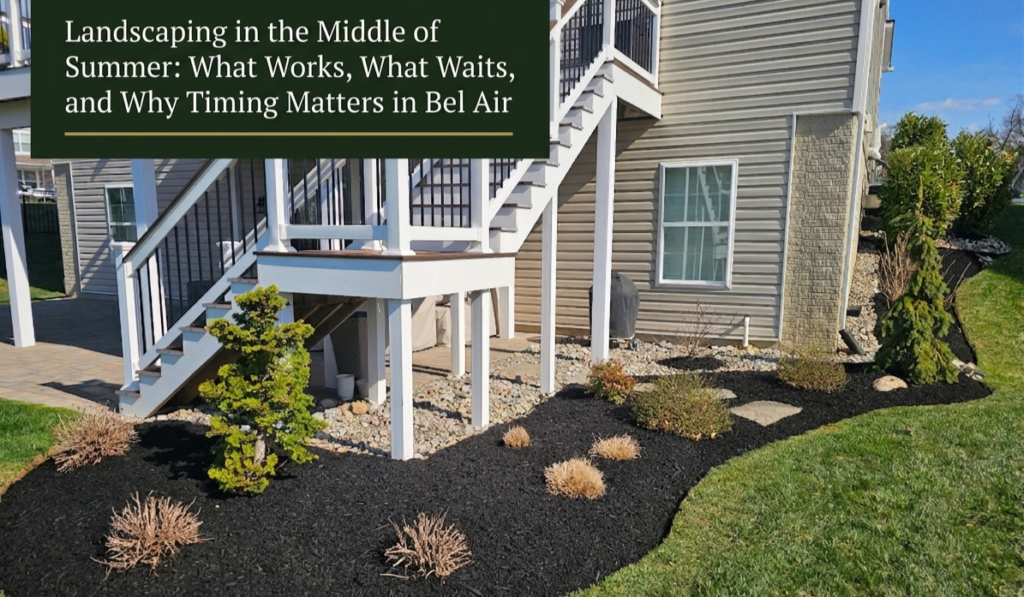
Every July, we hear the same worry from Harford County homeowners. It is too hot to plant. The heat will kill the new bushes. We should just wait until fall. Some of that concern is warranted, and some of it costs people an entire season of use.
Here is the honest answer: most of what a design-build landscaper does through the summer works well when the right process gets used. Some plantings genuinely should wait. Knowing which is which, and why, is the difference between a smart summer project and a costly one.
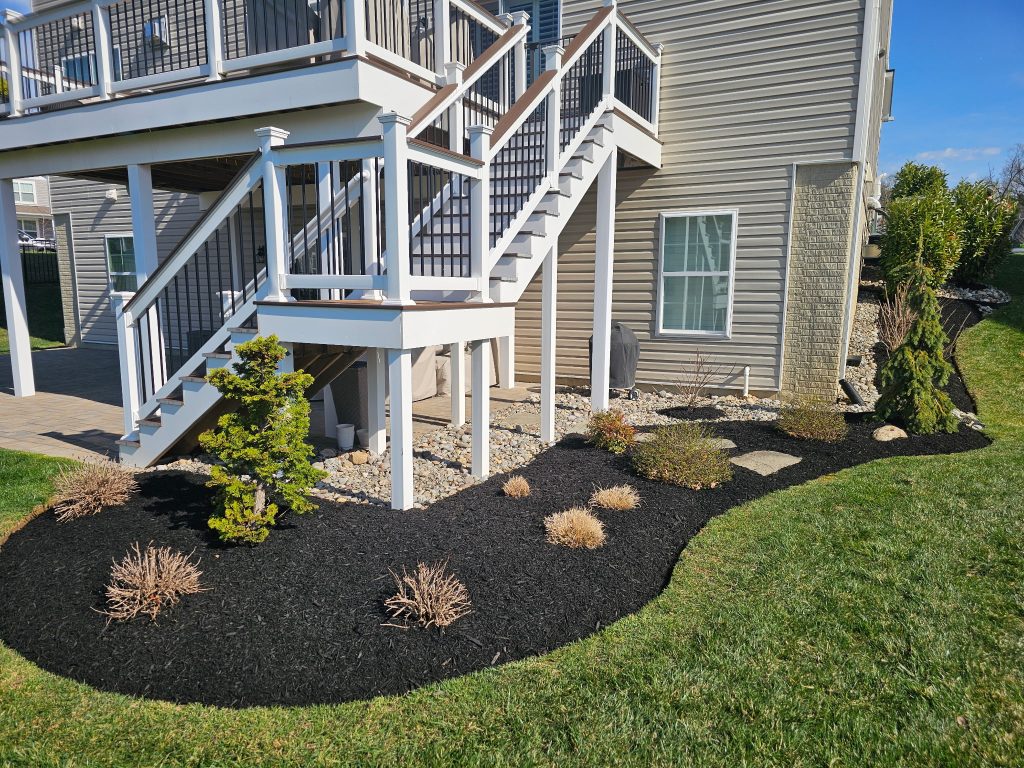
The short version: Landscape design, drainage and site work, lighting installs, container-grown plants with the right care, and any project that starts with design in summer for fall installation are all sound summer decisions in Bel Air. The categories to be cautious about are transplanting mature trees, moving fleshy-rooted species like dogwoods and magnolias, and installing balled-and-burlapped trees in mid-summer heat without significant watering commitment. A good landscaper will tell you which category your project falls into before taking your deposit.
The Bel Air summer, in real numbers
Bel Air’s summers are not brutal, but they are demanding. According to climate data for our area, July averages a high of 84.4°F, with an average heat index of 93.6°F once humidity gets factored in. That humidity sits around 75 to 80% for most of the summer. August is actually the wettest month of the year, delivering 4.49 inches of rain across about 16 rainy days. Combined with the 46 inches of annual precipitation the Maryland State Climatologist records for our region, that shapes what a summer landscape project looks like on the ground.
Two implications matter here. First, plants going into the ground in July and August face heat stress but rarely drought stress. There is more water available than most homeowners assume. Second, drainage and site preparation work has to be scheduled around thunderstorm patterns, which good crews plan for.
What University of Maryland Extension actually says
We do not want to be dishonest with you about this. According to the University of Maryland Extension’s guidance on planting trees and shrubs, “fall, winter (soil should not be frozen), and early spring are the best times to plant trees and shrubs. Summer planting, when plants are in full leaf, can be stressful and should be avoided if possible.” Certain species with fleshy roots, including dogwoods, magnolias, willow oaks, tulip poplar, and yellowwood, should be planted in spring rather than any other time.
That is the Extension’s position, and any landscaper telling you differently is selling. But note what the guidance also says: “Most balled-and-burlapped and container-grown trees can be planted any time the soil is not frozen.” That door stays open through summer, provided the process respects the heat.
What genuinely works in summer
There is more that succeeds in a Bel Air July than most homeowners realize.
Landscape design and planning. The design phase carries zero weather risk. Meeting to walk the property, developing the plan, refining the plant palette, and preparing installation drawings can happen any month. Homeowners who start their design work in July are ready to install in the ideal fall window, which the University of Maryland Extension identifies as one of the two best planting seasons of the year. Waiting until October to begin the conversation usually means installation slides into the following spring.
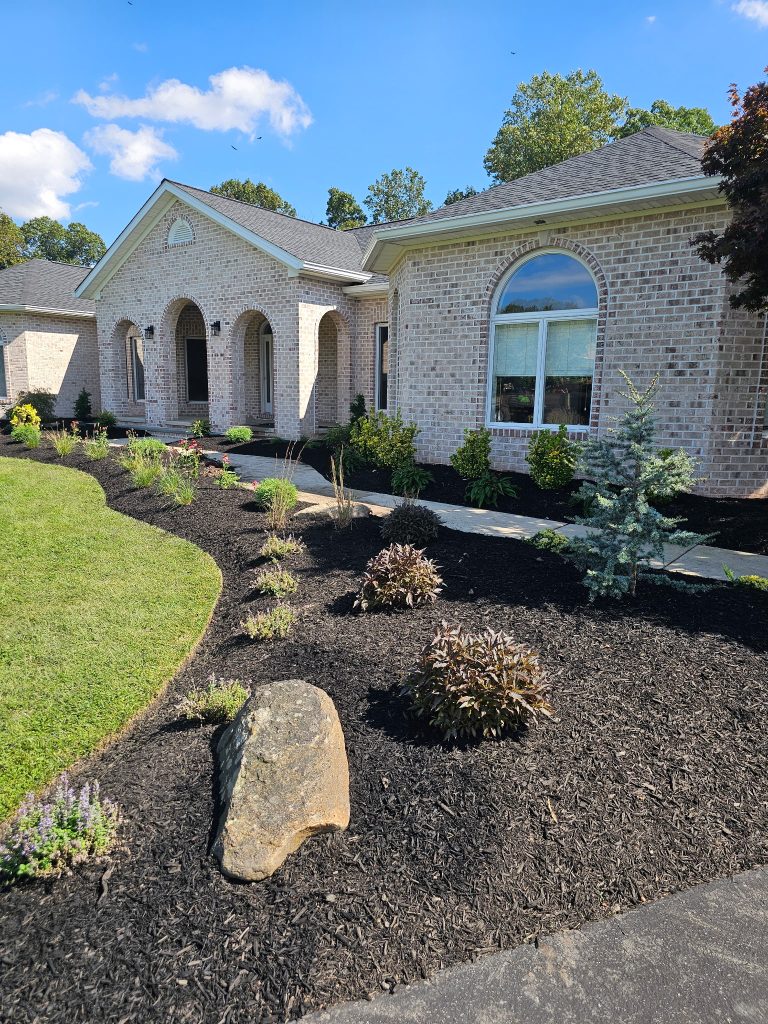
Drainage, grading, and site preparation. Fixing standing-water problems and correcting grade are summer-appropriate projects. The work happens below the leaf line and does not depend on planting windows. Given that August is our wettest month, it is often the best time to observe exactly where water sits on a property, which sharpens the design solution. Our guide to why Harford County yards hold water covers the diagnostic side of that work.
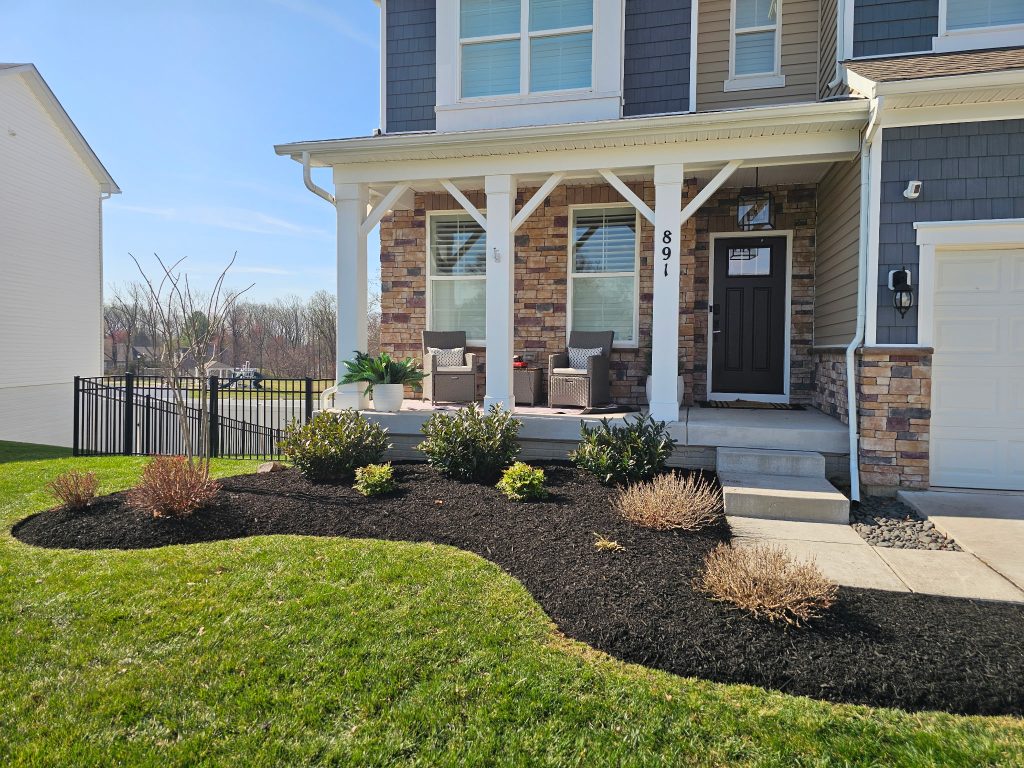
Landscape lighting. Low-voltage lighting is a summer-friendly install, and there is a specific case for doing it now: evenings in July and August are when homeowners spend the most time in their backyards. Living with a lit landscape through peak use season is more informative than living with one in November. Our landscape lighting design guide walks through the approach.
Container-grown plantings with the right process. Container-grown material transitions to the ground with far less root disruption than balled-and-burlapped stock, and the Extension’s own guidance permits it any time the soil is not frozen. With deep watering established at planting and maintained through establishment, container plantings succeed in summer routinely.
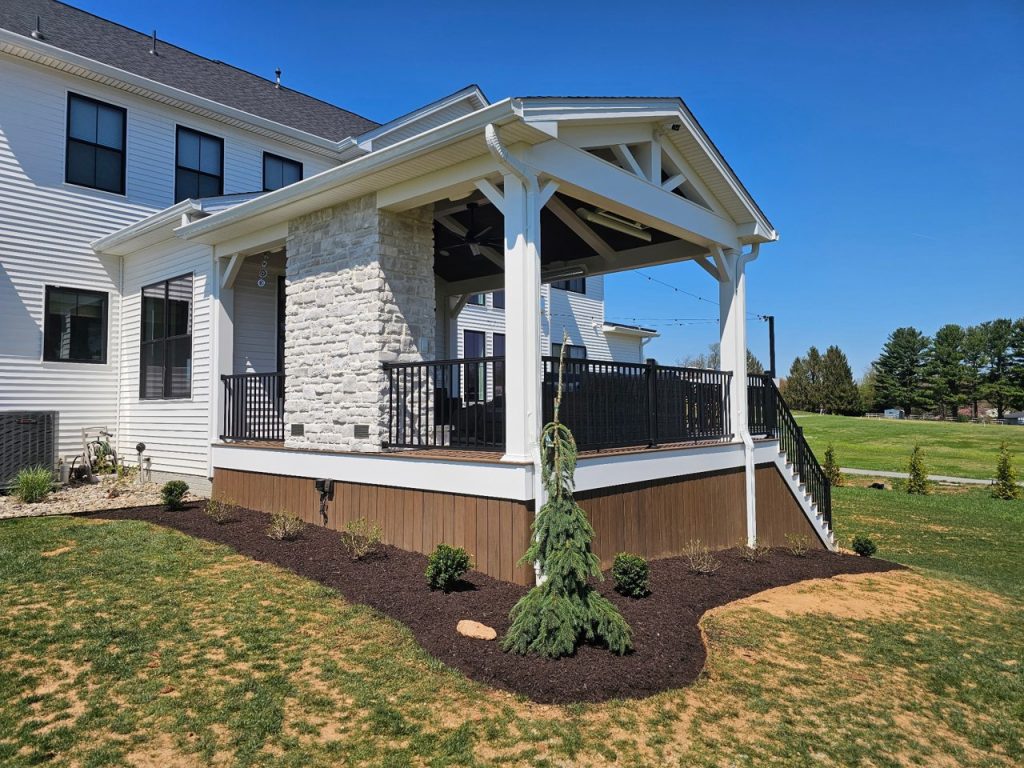
Renovation planning and phased execution. A comprehensive landscape renovation rarely happens in a single day regardless of season. Renovations get planned, sequenced, and often phased across multiple months. Starting the process in summer usually means the biggest visible work happens in the cooler autumn window that Extension research favors, with drainage and site preparation handled first in warm weather.
What is worth waiting for
The categories that genuinely warrant patience are narrower than the fear suggests.
Moving mature or established trees. Large tree transplanting is a fall or late-winter job. The Extension notes that Maryland has two proper transplanting seasons, mid to late fall and late winter to early spring, before new growth begins.
Fleshy-rooted species. Dogwoods, magnolias, willow oaks, tulip poplar, and yellowwood want spring planting. Any competent designer builds around this constraint.
Balled-and-burlapped installs into unwatered ground. B&B trees can go in through summer only when a serious watering commitment gets established. Without irrigation or a homeowner who will be present to hand-water, this category should wait.
Broadleaf evergreens like mountain laurel, boxwood, and hollies. These do best planted in spring, and the Extension specifically allows early fall as a secondary window when the plants are watered deeply.
How the summer heat gets handled when work does proceed
For the summer projects that do move forward, the process matters more than the calendar. Container-grown material gets planted early in the morning or on cloudy days when possible, mirroring the Extension’s transplant guidance to “reduce stress on the plant that can cause transplant shock” by working in cool, calm conditions. Watering programs get established at install rather than mentioned as an afterthought. Mulch layers hold moisture in the root zone while the plant establishes. And critically, a professional installer knows which species can handle the transition and which cannot.
That last point separates a good summer install from a bad one. If a landscaper agrees to plant a mature dogwood in mid-July because the customer wants it, the customer probably loses a $400 tree by October.
Why starting the conversation now still pays
Even for homeowners who decide to hold physical installation for fall, summer is the correct time to start. Design work takes weeks. Reputable design-build firms book installation windows well in advance. Homeowners who call in October about a project they hoped to have finished before Thanksgiving usually get told the next available install slot is in April. Homeowners who call in July for a fall install usually get exactly the timeline they want.
If you are considering a project on your Bel Air property, whether it is a targeted planting update, a drainage fix, or a full landscape renovation, our team can walk your property this month and design around the season that best serves the plants. See how we approach landscaping in Bel Air, MD, or call (443) 794-8108 to talk through your yard.
Frequently asked questions
Can I have landscaping done in July or August in Maryland? Yes, for most categories. Design, drainage, lighting, and container-grown planting can all proceed in summer with the right process. The University of Maryland Extension identifies fall as an ideal planting season, so many projects that start with summer design lead to autumn installation of the plant material.
Will the heat kill my new plants? Not if the species and installation method are chosen correctly. Container-grown plants installed with a deep watering program and mulched properly typically establish well. Certain species, including dogwoods and magnolias, prefer spring planting and should not be installed in mid-summer regardless.
Is summer a good time to fix a drainage problem? Often yes. Bel Air summer thunderstorms make the problem visible on the ground, which sharpens the diagnosis and the design solution. Site work depends on weather windows and crew scheduling rather than on plant biology, and August is our wettest month, so a good crew plans around that pattern.
Should I just wait until fall to call a landscaper? Usually not. Reputable design-build firms book fall installation slots weeks or months in advance. Starting the design conversation in summer gives you access to the autumn install window that the University of Maryland Extension recommends. Calling in October often means waiting until the following spring.
What is the best month to plant in Harford County? For most trees and shrubs, fall and early spring are ideal because roots establish in cool soil without the demands of leaf-out. That said, many species tolerate summer install when handled correctly, and design, drainage, and structural work can happen year-round.

With over 10 years of experience locally in Maryland, Oakfield Landscaping has a team of skilled professionals ready to deliver exceptional services.
Start your project
Ready to create a landscape that enhances your property and reflects your vision?
Our design process begins with an in-depth consultation:
- Walk your property and discuss your vision
- Review your functional & aesthetic preferences
- Assess existing landscape conditions
- Explain our design-installation process and timeline
- Answer your questions about our approach