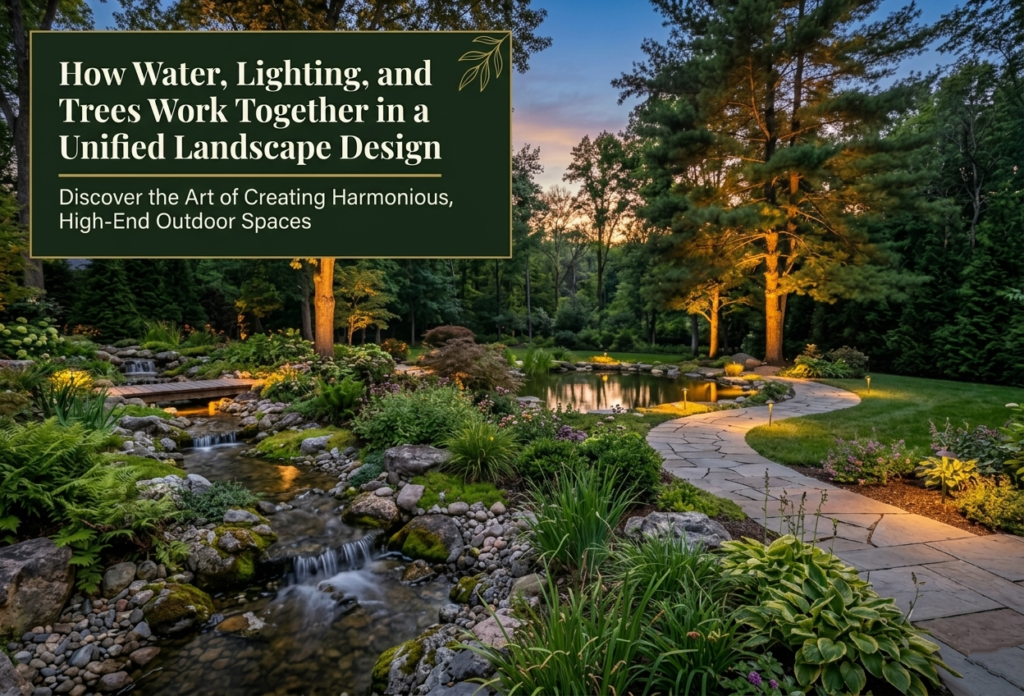
Most Maryland homeowners add landscape features one at a time. You plant a few trees this year. Maybe you add landscape lighting next summer. A fountain sounds nice, so you hire someone to install one down the road. Each project gets handled by a different contractor.
The result? A yard that feels disconnected. Your lighting doesn’t highlight your best trees. Your water feature sits in a shadowy corner where nobody sees it. Your privacy plantings block the sunset view you wanted to enjoy from your deck. You’ve spent good money on individual features, but they don’t work together. The landscape doesn’t flow.
That’s the difference integrated landscape design makes. Instead of treating water, lighting, and trees as separate projects, you plan them together from the start — as a single, cohesive system. The water feature becomes part of the evening lighting scene. The trees anchor both visual and functional zones. Everything connects.
Here’s how it works, why it matters, and what Harford County homeowners should know before adding these features to their property.
What Integrated Landscape Design Actually Means
Integrated landscape design means planning your outdoor features — water, lighting, plantings, and hardscape — as one unified system, not a series of separate projects.
Think of it as a design-build approach where all elements are planned and installed by one team. Everyone works from the same vision. The lighting designer knows where the trees will go. The water feature installer coordinates with the person choosing plant locations.
Compare that to the piecemeal approach. You hire a tree company to plant evergreens. Then you call a pond installer. Then an electrician strings up some lights. Each contractor works independently. Nobody’s thinking about how everything fits together.
With integrated design, you get a cohesive vision from day one. One team handles everything. One point of accountability. No budget surprises from contractors who didn’t know what the other guys were doing.
This matters even more in Maryland. Our growing zone (7a) means wet springs, hot summers, and variable winters. Your landscape needs to handle all of it. Features need to be planned with our local climate in mind — not just copied from a magazine photo taken in California.
Why Water, Lighting, and Trees Are the Three Core Layers
These three elements form the foundation of a landscape that looks and functions beautifully year-round — day and night, summer and winter.
Trees Provide Structure and Scale
Trees anchor everything else. They define borders, create privacy, and frame the views you want to keep or hide.
Mature trees add immediate impact. A well-placed specimen tree becomes a focal point. Privacy screens along property lines block sightlines from neighbors. Shade trees over your patio make summer evenings bearable.
Trees also shape microclimates. That shade tree doesn’t just look good — it cools your outdoor dining area by 10 degrees in July. Evergreens planted on the north side of your property block winter winds.
When you plan trees as part of the whole design, you position them where they’ll do the most good. Not just “somewhere in the yard.”
Water Features Add Movement and Sound
Water brings something you can’t get from plants or stone alone: movement and sound.
A custom pond, fountain, stream, or waterfall creates sensory depth. You see the ripples. You hear the trickling. On a hot afternoon, that sound makes your backyard feel cooler even if the temperature hasn’t changed.
The key is making water features feel like natural extensions of the landscape — not afterthoughts. A naturalistic stream that flows near your seating area creates ambiance. A fountain tucked behind the garage where nobody sits? That’s wasted money.
When water features are designed with the rest of the landscape, they’re positioned where you’ll actually experience them. Where you’ll see them from the kitchen window. Where you’ll hear them from the patio.
Landscape Lighting Extends Usability and Beauty
Lighting transforms how you experience your landscape after dark.
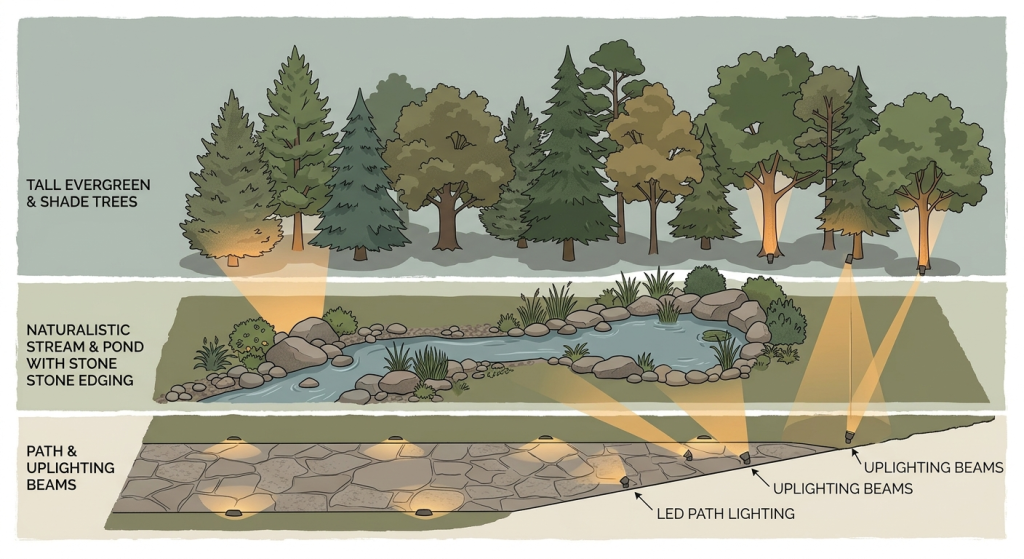
Good outdoor water features, lighting, and tree services in Harford County work in three layers. Ambient lighting creates an overall glow. Task lighting illuminates pathways and steps so you don’t trip. Accent lighting highlights specimen trees, water features, and architectural details.
Picture this: LED uplighting on a mature oak tree. Downlighting on the water feature beneath it. Path lights guiding visitors from the driveway to your front door. At night, these layers create drama and depth.
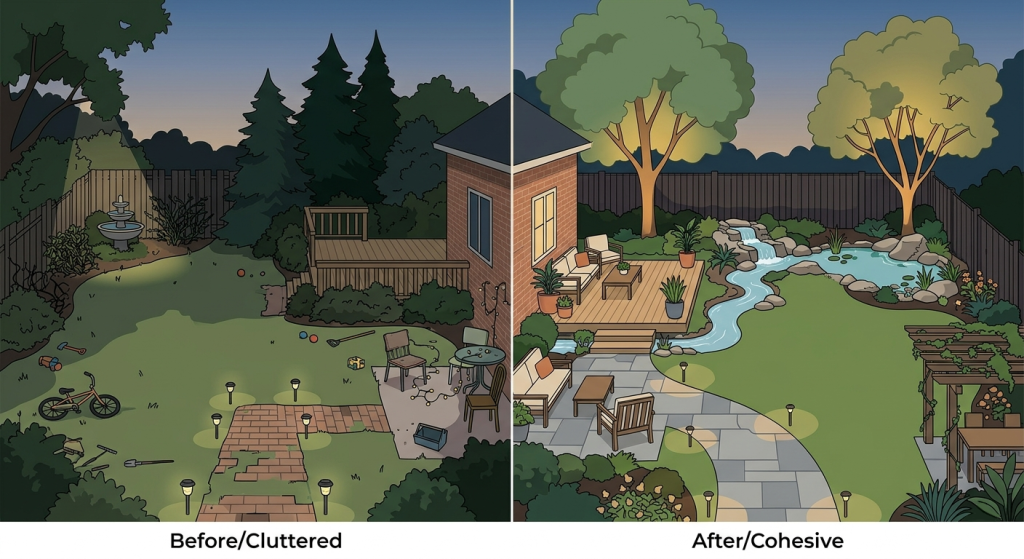
Without integrated planning, you get lights that don’t match the layout. Path lights illuminating empty lawn. Spotlights shining on nothing interesting. Fixtures that clash in style.
What Goes Wrong When You Add Features One at a Time
Piecemeal landscaping wastes money and creates a yard that never quite feels finished.
Here’s what happens when you don’t plan everything together:
1. Lighting that doesn’t match the layout
You install path lights before planting trees. Now those lights illuminate empty lawn instead of guiding visitors along a natural walkway. You’ve spent money on fixtures in the wrong spots.
2. Water features in the wrong spot
A beautiful fountain gets tucked in a corner because that’s the only space left after trees and beds were planted. No one sees or hears it from the patio. It might as well not be there.
3. Trees that block views or shade the wrong areas
You plant privacy evergreens along the back fence. Six months later, you realize they block the sunset view you wanted to enjoy from your deck. Now you’re stuck choosing between privacy and the view.
4. Mismatched styles
One contractor installs modern LED lights. Another builds a rustic stone waterfall. The styles clash. Your yard looks like it was designed by committee — because it was.
5. Budget creep and surprise costs
Each contractor prices their work separately. Coordinating schedules adds delays. Fixing conflicts between what one contractor installed and what another needs costs extra. The final bill is higher than you planned.
These aren’t rare problems. They happen on most properties where features get added one at a time. It’s frustrating, and it’s avoidable.
What Harford County Homeowners Should Know Before Starting
A few local and practical considerations before you begin your project.
1. Maryland’s Growing Zone (7a)
Not every tree or plant thrives here. You need someone who knows what survives wet springs, hot summers, and variable winters. We work exclusively with species proven in our region.
2. Seasonal Changes Matter
Your landscape should look good in all four seasons. Evergreens provide winter structure. Perennials add summer color. Deciduous trees give you fall interest. One-season landscapes get boring fast.
3. Permitting (What You Don’t Need to Worry About)
Oakfield handles landscape design, plantings, water features, and lighting. We don’t offer services requiring permits — like patios, decks, or retaining walls. This keeps projects simpler and timelines predictable.
4. Timeline Expectations
Most design-build projects take 6 to 12 weeks from consultation to completion, depending on scope. Weather and plant availability can affect timing, but we’ll keep you informed.
5. Mature Trees Add Immediate Impact
Planting larger, mature specimens costs more upfront but delivers instant curb appeal and privacy. It’s a favorite choice for homeowners who don’t want to wait 5 to 10 years for growth. You get the impact now.
Why This Matters for Your Property’s Long-Term Value
Integrated landscape design isn’t just about looks — it’s an investment that matures and appreciates over time.
Thoughtfully designed landscapes increase curb appeal and resale value. When buyers tour your home, the outdoor space makes an impression. Mature trees and well-placed features attract offers.
Low-maintenance designs save time and money over the years. You’re not constantly ripping things out and starting over. You’re not hiring three different contractors to fix problems that wouldn’t exist with better planning.
A landscape designed to mature — not just look good on day one — continues to improve as plants fill in. That specimen tree gets fuller. The perennials spread. The lighting highlights growth you anticipated years earlier.
You’re not just paying for installation. You’re paying for a landscape that gets better with time.
If you’re ready to create a landscape where water, lighting, and trees work together beautifully, let’s talk. Call (443) 794-8108 or email eric@oakfieldlandscaping.com to schedule your consultation.
Bringing It All Together
Integrated landscape design means planning water, lighting, and trees as one unified system — not three separate projects. When done right, you get a yard that flows, functions, and looks beautiful day and night, season after season.
For Harford County homeowners, that means working with someone who understands local growing conditions, sources quality materials, and takes personal responsibility for the result.
At Oakfield Landscaping, that’s how we approach every project. If your yard feels disconnected — or you’re starting from scratch — we’d love to help you create something you’ll enjoy for years to come.
Contact us at (443) 794-8108 or eric@oakfieldlandscaping.com. Let’s build something beautiful.

With over 10 years of experience locally in Maryland, Oakfield Landscaping has a team of skilled professionals ready to deliver exceptional services.
Start your project
Ready to create a landscape that enhances your property and reflects your vision?
Our design process begins with an in-depth consultation:
- Walk your property and discuss your vision
- Review your functional & aesthetic preferences
- Assess existing landscape conditions
- Explain our design-installation process and timeline
- Answer your questions about our approach