The most compelling luxury landscapes aren’t following temporary aesthetic fads—they’re responding to how homeowners want to live outdoors. Today’s landscaping trends reflect a shift toward creating environments that feel intentional, effortless, and deeply connected to the natural world. Whether you’re considering a complete landscape transformation or refining specific areas of your property, understanding these trends helps you make design decisions that will remain relevant and beautiful for years to come.
Modern luxury landscaping prioritizes experience over ornament. It values native ecology alongside visual impact. And increasingly, it recognizes that the best outdoor environments are those that require less ongoing intervention while delivering more lasting enjoyment. These aren’t trends driven by novelty—they’re emerging from a clearer understanding of what makes outdoor living truly valuable.
Key Trends in Luxury Landscape Design
High-end landscaping has evolved beyond simply maximizing square footage or adding features. The current direction emphasizes refinement, restraint, and a deeper alignment between design and daily life. These trends shape how luxury properties are being conceived from the ground up.
Outdoor Living Designed Around Experience, Not Structures
The most significant shift in luxury landscaping trends is the move away from thinking about outdoor areas as rooms to be built and toward thinking about them as experiences to be curated. Instead of designing around pergolas, pavilions, or built-in kitchens, designers are now asking: How do you want to feel when you’re outside? What moments matter most?
This experience-first approach means fewer fixed elements and more thoughtful consideration of sightlines, seasonal interest, shade patterns, and flow between different areas of the property. A luxury landscape might include a discrete gravel terrace beneath mature trees for morning coffee, a sunlit lawn designed for gatherings, and a secluded garden path that encourages evening walks—all without relying on permanent construction.
The result is outdoor living that feels less like an extension of the house and more like its own distinct environment. It’s a trend that aligns perfectly with how people actually use their properties: fluidly, spontaneously, and in ways that change throughout the day and across seasons.
Plant-Forward Design With Natural, Timeless Palettes
Modern landscape design ideas increasingly center on plants as the primary design medium. This isn’t about maximizing planting beds or creating high-maintenance gardens—it’s about using thoughtfully selected plantings to define spaces, create privacy, introduce seasonal variation, and anchor the landscape in its regional context.
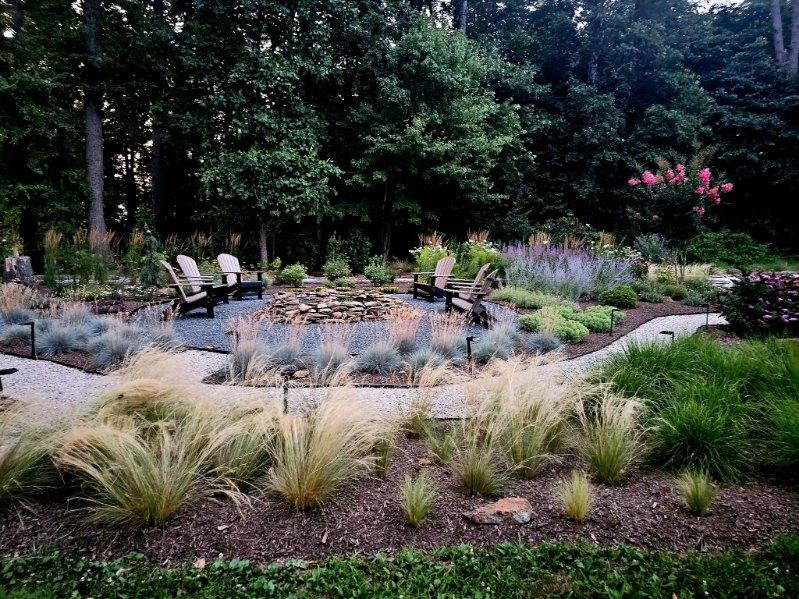
Luxury projects are moving toward naturalistic palettes: native grasses, adaptable perennials, flowering shrubs that attract pollinators, and layered canopy trees that provide structure and shade. These plant communities often look better with age, requiring less replacement and intervention than formal beds or exotic specimens.
The aesthetic is softer, more organic, and deliberately unhurried. Rather than relying on repetitive rows of boxwood or imported tropicals that need constant care, designers are composing plant layers that feel discovered rather than installed. This approach supports local ecology, reduces maintenance demands, and creates landscapes that feel rooted in place rather than imposed upon it.
Color palettes lean toward greens, silvers, and seasonal punctuation from native blooms—avoiding the bright annuals and heavy mulch beds that defined earlier luxury landscaping. The goal is a landscape that feels complete from day one but continues to mature and deepen over time.
Low-Maintenance Landscapes With Long-Term Visual Impact
One of the clearest outdoor living trends is the increasing demand for landscapes that deliver beauty without constant upkeep. This doesn’t mean neglect—it means intelligent plant selection, durable materials, and design strategies that work with natural systems rather than against them.
Low-maintenance luxury landscapes use drought-tolerant plantings, minimize lawn areas in favor of meadow grasses or groundcovers, and reduce the need for seasonal replanting. They incorporate mulch alternatives like decomposed granite or natural leaf litter. And they’re designed with mature plant sizes in mind, eliminating the cycle of constant pruning and reshaping.
This trend reflects a broader cultural shift: homeowners with luxury properties increasingly value time over tasks. They want landscapes they can enjoy, not landscapes that require weekend management. And they recognize that the most enduring outdoor environments are those that age gracefully with minimal intervention.
The visual impact comes from strong bones—well-placed specimen trees, thoughtful grading, carefully considered plant massing—rather than constant refresh. A well-designed low-maintenance landscape looks better in year five than it did at installation, and better still in year ten.
Design Trends Influencing High-End Landscaping Projects
Beyond the foundational philosophy, specific design elements are reshaping how high-end landscaping trends manifest on actual properties. These elements add dimension, functionality, and evening usability without relying on heavy construction.
Landscape Lighting for Ambiance, Safety & Evening Use
Lighting has become one of the most impactful layers in luxury landscape design. Properly designed landscape lighting extends usability into the evening, highlights key plantings and trees, and creates entirely different atmospheres after dark.
The trend is moving away from visible fixtures and toward subtle, integrated lighting that emphasizes the landscape itself—not the technology. Path lights are recessed or shielded, uplighting draws attention to specimen trees and architectural plants, and soft downlighting mimics natural moonlight filtering through canopy.
This layered approach makes outdoor areas inviting long after sunset and dramatically improves safety along pathways, steps, and transitions between different areas of the property. Designers are also incorporating dimmable systems and warmer color temperatures to create more nuanced, comfortable evening environments.
Lighting is no longer an afterthought—it’s a design element considered from the earliest planning stages, shaping how the entire landscape is experienced across a full 24-hour cycle.
Water Features as Organic Focal Points
Water has always held appeal in landscape design, but the current trend emphasizes naturalistic, organic forms over formal fountains or geometric pools. The goal is to create water features that feel like they’ve always been part of the landscape—streams that meander through plantings, pools that reflect sky and surrounding trees, gentle rills that move water quietly through garden areas.
Custom landscape design trends increasingly incorporate water as a sensory element: the sound of moving water, the reflective quality of still surfaces, the way water attracts birds and wildlife. These features are designed to feel discovered rather than announced, integrated into the broader landscape composition rather than positioned as standalone statements.
The most successful water features enhance the naturalistic character of the property while adding movement, sound, and a focal point that changes throughout the day. They’re often paired with native plantings to reinforce the sense that the water belongs exactly where it is.
How Landscaping Trends Influence Project Scope & Investment
Understanding current trends helps clarify not just what to build, but how to think about investment in your landscape. Well-aligned projects often deliver more enduring value with less total material input—because the design is doing more of the work.
Plant-forward, low-maintenance approaches may reduce the need for extensive constructed elements while increasing the role of thoughtful grading, soil preparation, and strategic planting. Lighting and water features, while requiring upfront investment, add significant usability and character without the square footage costs of built structures.
The key insight: luxury landscaping investment is shifting from “how much can we add” to “what will create the most meaningful, enduring environment.” This often means fewer elements, higher quality materials, more focus on design and installation expertise, and a willingness to invest in elements like mature specimen plantings and integrated systems that pay dividends over time.
Applying Modern Landscaping Trends to Maryland Properties
Luxury landscaping Maryland projects benefit from the region’s four distinct seasons, diverse native plant palette, and varying topography. The best local projects embrace these conditions rather than working against them.
Maryland’s climate supports a rich mix of deciduous trees, native perennials, and adaptable shrubs that provide year-round interest. Fall color, spring blooms, winter structure, and summer canopy all play roles in creating landscapes that shift and evolve across the calendar.
The state’s topography—from rolling Piedmont hills to flat coastal plains—offers natural opportunities for grading, elevation changes, and sightline management. Thoughtful designers use these existing conditions to create layered landscapes with natural privacy, distinct areas, and strong visual flow.
Successful Maryland luxury landscapes also account for regional weather patterns: summer humidity, occasional drought periods, winter freeze-thaw cycles. Plant selection and material choices reflect this reality, favoring resilient species and durable finishes that age well in the local climate.
Understanding regional context allows designers to create landscapes that feel native to place—not generic luxury templates applied without consideration for where they’re located.
Designing for Timeless Landscapes, Not Short-Term Trends
The most valuable landscaping trends aren’t about chasing novelty—they’re about recognizing enduring principles that create outdoor environments with lasting appeal. A well-designed luxury landscape should feel current without feeling dated, refined without feeling rigid, and intentional without feeling overdone.
Timeless design prioritizes proportion, balance, and connection to site. It uses plants that will mature beautifully. It incorporates elements that serve clear purposes rather than checking aesthetic boxes. And it recognizes that the best landscapes are living systems that improve with age, not fixed compositions that peak at installation and decline from there.
This doesn’t mean avoiding all contemporary ideas—it means evaluating trends through the lens of whether they genuinely improve how you experience your property, whether they suit your region and site conditions, and whether they’ll remain relevant as tastes and priorities evolve.
The goal is a landscape that feels like it belongs—to the architecture, to the region, to the way you live—rather than one that announces its moment in design history.
Talk With a Landscape Designer About Your Property
Every property has unique opportunities shaped by topography, existing vegetation, sun patterns, and how you want to use outdoor areas. Translating current landscaping trends into a design that works specifically for your site requires experience, local knowledge, and careful listening.
A skilled landscape designer will help you separate meaningful trends from passing fads, identify which directions align with your priorities, and develop a plan that responds to your property’s specific character. The conversation should focus less on what’s popular and more on what will create the outdoor environment you’ll value most.
If you’re considering how these trends might apply to your Maryland property, start with a conversation about what you want your landscape to do—not just how you want it to look. That clarity creates the foundation for design decisions that will serve you well for decades.
Landscape Design & Installation, by us, right here in Maryland
Ready to create a landscape that enhances your property and reflects your vision? Our design process begins with an in-depth consultation where we discuss your goals, assess your property, and explore how we can bring your outdoor space to life.