Your backyard is more than square footage—it’s the foundation of how you experience your home outdoors. Whether you’re drawn to clean lines and minimalist form or prefer layered textures and naturalistic design, the right backyard design inspiration can transform unused space into a curated environment that reflects your lifestyle. This guide explores proven approaches across style preferences, scale constraints, and functional priorities to help you envision what’s possible.
Modern & Contemporary Backyards
Modern backyard design prioritizes geometry, restraint, and intentional material selection. Clean horizontal lines guide the eye through the space, while structural plantings—ornamental grasses, columnar evergreens, clipped hedges—provide year-round definition without visual clutter. Color palettes lean neutral, allowing architecture and form to anchor the composition.
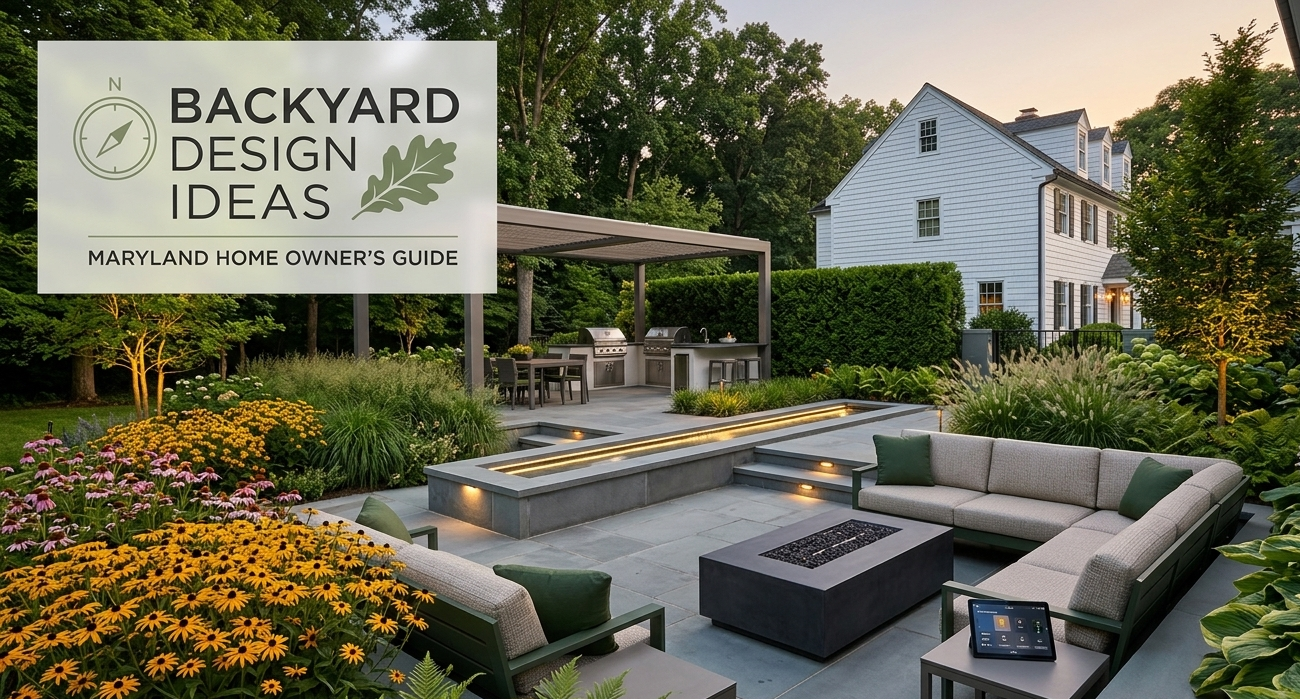
Material contrast is essential in contemporary outdoor spaces. Smooth stone, steel edging, and board-formed concrete create tension against soft groundcovers and architectural foliage. Water features in modern settings often take the form of linear rills or reflecting pools that emphasize stillness and surface rather than movement. Landscape lighting reinforces geometry after dark, with recessed fixtures uplighting specimen trees or washing vertical planes to extend usability and atmosphere into evening hours.
The most successful modern backyards balance austerity with livability. Seating zones are defined but not enclosed, and planting beds are generous enough to soften edges while maintaining the clarity of the overall layout. This style works especially well on properties with strong architectural language, where the landscape extends interior design principles outward.
Luxury & Resort-Style Retreats
A backyard oasis ideas often begin with the question of atmosphere: what feeling should the space evoke when you step outside? Resort-style design draws from hospitality landscapes, where layered experiences—dining, lounging, solitude—are woven into a cohesive environment. These are spaces designed for immersion, not just use.
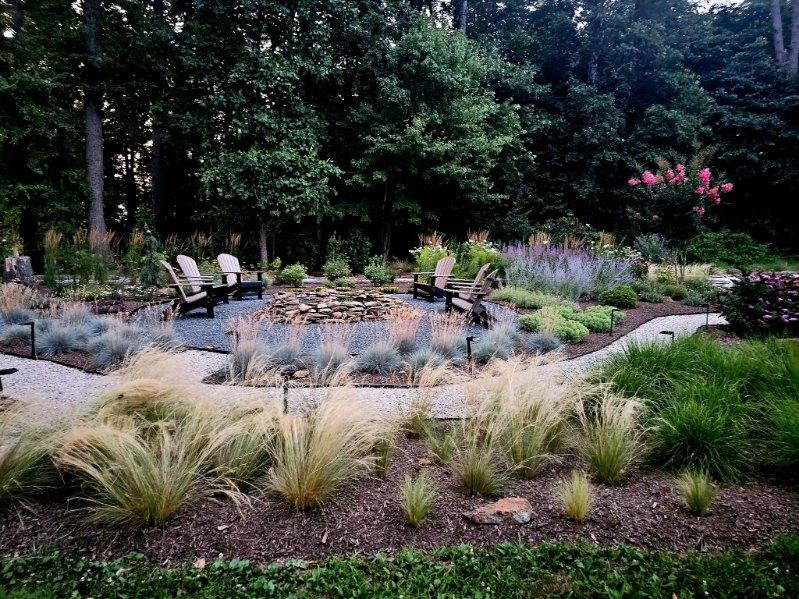
Water is frequently central to luxury backyard makeover ideas. Natural swimming ponds bordered by native sedges and stone, or formal reflecting pools that mirror sky and canopy, establish a focal point that animates the entire property. Waterfalls and cascades introduce sound, masking neighboring activity and reinforcing the sense of seclusion. The design of these features matters as much as their presence—scale, material, and integration determine whether they feel organic or imposed.
Estate landscaping at this level also incorporates lighting as a design system, not an afterthought. Pathways, specimen plantings, and architectural features receive dedicated illumination to create depth and drama after sunset. Layered zones allow the property to shift in function and mood throughout the day, from morning coffee in a sunlit garden alcove to evening gatherings under a lit pergola. The result is a landscape that performs as well at night as it does during the day, extending its utility and aesthetic presence around the clock.
Small Backyard Solutions
Limited square footage demands precision. In compact yards, every plant, material choice, and spatial division carries outsize influence. The goal is to maximize perceived scale and usability without introducing visual clutter or sacrificing comfort.
Vertical design becomes critical in tight footprints. Espaliered trees, wall-mounted planters, and layered canopy heights draw the eye upward, making boundaries feel less confining. Multi-functional zones—a dining area that doubles as workspace, a fire feature surrounded by movable seating—ensure flexibility without overcrowding. Restrained material palettes unify small spaces, preventing fragmentation that can make a yard feel even smaller.
Modern backyard design principles translate especially well to compact sites. Simplified geometry, clean edges, and strategic voids create breathing room. Even a small water feature, such as a wall-mounted fountain or shallow basin, can introduce sound and movement that transforms the sensory experience. Lighting extends usability and adds dimension, with uplighting and path lights carefully placed to avoid overwhelming the space. Thoughtful small backyard design doesn’t try to do everything—it does a few things exceptionally well.
Privacy & Comfort Features
Privacy is rarely achieved through a single solution. Effective screening combines living and structural elements—layered evergreen hedges, ornamental trees with dense canopies, and strategic grading that creates natural elevation shifts. The most successful privacy strategies feel integrated rather than defensive, shaping views both inward and outward.
Comfort extends beyond furniture. Microclimates created through canopy cover, windbreaks, and grade adjustments allow the space to be used across seasons and times of day. Pergolas and arbors provide filtered shade while maintaining openness, and deciduous trees deliver summer cooling without blocking winter sun. Acoustic comfort matters as much as visual screening—water features and dense plantings buffer street noise and create a more insulated environment.
Landscape lighting plays a dual role in comfort-focused design. Low-voltage path lighting ensures safe navigation, while ambient uplighting on trees and architectural features creates intimacy and depth. Dimmable systems allow homeowners to adjust intensity based on use, from bright task lighting for entertaining to soft accent lighting for quiet evenings. When privacy and comfort are addressed as interconnected goals, the backyard becomes a true extension of the home’s living area.
When to Hire a Professional Designer
Design clarity separates functional backyards from cohesive landscapes. A professional brings spatial literacy—the ability to read grades, drainage, light patterns, and circulation—and translates that into a buildable plan. If your property involves multiple elevation changes, existing mature trees that require preservation, or complex functional requirements, professional design is an investment in avoiding costly missteps.
Landscape designers also navigate long-term performance. They understand which plants thrive in specific microclimates, how root systems interact with hardscape, and how seasonal color transitions shape the year-round experience. For luxury backyard makeover ideas or estate-scale renovations, a designer coordinates phasing, budgets, and trade coordination, ensuring the vision is executed as intended rather than compromised in the field.
The right time to engage a designer is before committing to materials, plantings, or layout decisions. Early involvement allows the design to inform grading, drainage, and structural decisions rather than retrofitting solutions around existing conditions. Whether you’re pursuing modern backyard design or a naturalistic retreat, a skilled designer transforms aspirations into a documented plan that contractors can execute with precision and homeowners can enjoy for decades.
Luxury and Estate Landscaping, right here in Maryland
Ready to create a landscape that enhances your property and reflects your vision? Our design process begins with an in-depth consultation where we discuss your goals, assess your property, and explore how we can bring your outdoor space to life.