You look at your yard and know something’s off. The shrubs are blocking your windows again. The mulch beds look messy no matter how often you clean them up. The whole design feels stuck in 2005, and honestly, you’re tired of looking at it.
Here’s the question that’s probably keeping you from calling anyone: do you just need better maintenance, or does this whole thing need to be redone?
You don’t want to waste money on a full renovation if all you needed was seasonal cleanup. But you also don’t want to spend another year trimming and mulching a landscape that’s never going to look the way you want. You’ve seen the transformation photos on Instagram, but you’re not sure if that’s what your property needs — or if you’re just being too hard on your yard.
Here’s the truth: the difference between landscape maintenance and renovation comes down to whether your yard’s structure is working — or if the design itself is the problem.
In this guide, we’ll walk you through the clear signs of each, what both services actually include, and how to know which one your Harford County property needs. No sales pitch. Just the same honest assessment Eric gives homeowners during site visits in Bel Air, Abingdon, and Aberdeen.
Let’s figure this out together.
What’s the Difference Between Landscape Maintenance and Renovation?
Bottom line: Maintenance keeps a healthy landscape looking its best. Renovation fixes a landscape that’s broken, outdated, or never worked in the first place.
Think of it this way: if your landscape’s design is solid and the plants are thriving, maintenance is like changing your oil and rotating your tires. It’s the regular care that keeps everything running smoothly.
But if the design itself is the problem — if plants are in the wrong spots, the layout doesn’t make sense, or the whole thing looks dated — maintenance is like putting premium gas in a car that needs a new engine. You’re investing in upkeep for something that’s fundamentally not working.
Landscape maintenance is ongoing care for a landscape that’s structurally sound. That means:
Seasonal pruning and trimming to keep plants healthy and shaped. Mulching to suppress weeds and retain moisture. Leaf cleanup in fall. Managing perennial beds as they fill in.
The key assumption here is that the design, layout, and plant selection are still working. You’re not fighting the landscape. You’re just keeping up with it.
Landscape renovation is redesigning or replacing major elements. That looks like:
Ripping out old plantings and redesigning beds from scratch. Fixing drainage or grading issues that maintenance can’t solve. Updating outdated designs — like those rows of evenly spaced yews every builder planted in the early 2000s. Installing new plant material that actually fits the space and thrives in Maryland’s climate.
Renovation is often phased over multiple seasons, especially for larger properties or budget considerations. But the goal is the same: give you a landscape that actually works, so maintenance can keep it looking great for years.
So how do you know which one your property needs? Let’s walk through the signs.
5 Clear Signs Your Harford County Landscape Needs Renovation (Not Just Maintenance)
Bottom line: If you’re dealing with any of these issues, trimming and mulching won’t solve the problem. You need a new design.
1. Your Plants Are Overgrown, Blocking Windows, or Taking Over Walkways
This is the most common sign we see in Harford County.
You’ve got shrubs that were planted 15 years ago when they were cute little two-foot balls. Now they’re eight feet tall, blocking your front windows, swallowing your porch lights, and creeping onto the walkway no matter how often you trim them back.
Here’s why maintenance won’t fix it: you can prune them back hard, and they’ll look better for a few weeks. But they’ll grow right back — because they’re the wrong plant for the space. That’s not a maintenance problem. That’s a design problem.
What renovation does: we replace oversized plants with species that fit the mature size of the space. If you’ve got a three-foot-wide bed under your front windows, we’re not planting something that gets six feet wide. We’re choosing compact evergreens, ornamental grasses, or layered perennials that stay in scale.
This is especially common in Harford County builder homes from the early 2000s. Contractors planted foundation shrubs based on cost and availability, not long-term fit. Those yews and barberry looked fine in year one. By year ten, they’re eating your house.
2. You Have Bare Spots, Dead Zones, or Plants That Never Thrived
Maybe it’s that corner of the yard where nothing grows. Or the perennials you’ve replanted three times, and they still look sickly. Or the spot that stays muddy all spring and bone-dry by August.
You keep trying. You add new mulch. You water more. You fertilize. Nothing helps.
Here’s why maintenance won’t fix it: the problem is usually soil, drainage, sun exposure, or the wrong plant for the conditions. No amount of trimming or feeding will make a sun-loving plant thrive in full shade, or fix soil that’s pure Maryland clay with no organic matter.
What renovation does: we evaluate the site conditions — how much sun it gets, what the soil is like, where water drains or pools — and redesign with plants that will actually thrive there. Sometimes that means amending soil. Sometimes it means swapping shade plants for sun plants. Sometimes it means adding drainage before we plant anything.
Maryland’s climate adds another layer: clay soil that holds water in spring and cracks in summer. Wet springs that drown shallow-rooted plants. Shade from mature oaks and maples that gets deeper every year. These aren’t maintenance issues. They’re site issues that require a new approach.
3. Your Landscape Looks Dated or Doesn’t Match Your Home’s Style
Picture this: a row of evenly spaced shrubs across the front of the house. No layering. No texture. No seasonal color. It looks like every other house on the block, because it probably came from the same builder package.
You’ve kept it trimmed. You’ve mulched every spring. But it still looks boring, and you’re tired of it.
Here’s the truth: the design itself is the problem. Maintenance keeps a design tidy. It doesn’t make a boring design interesting.
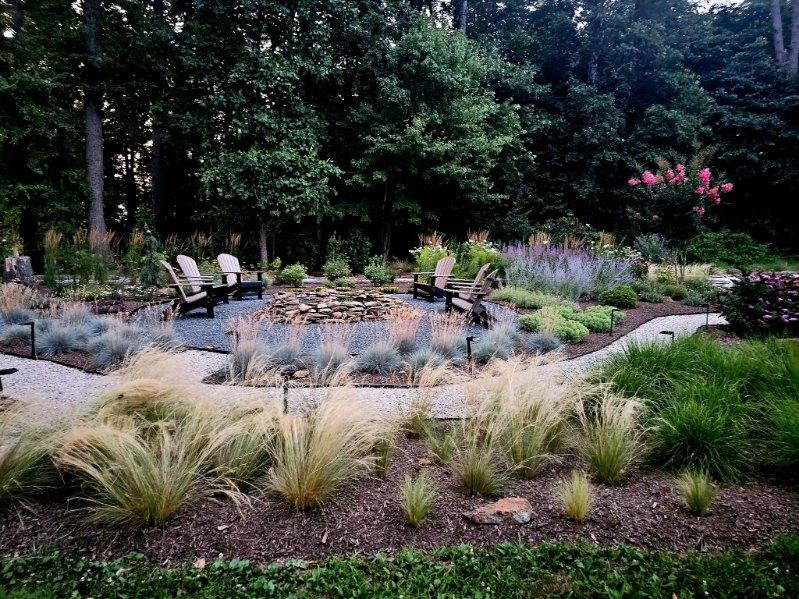
What renovation does: we create a cohesive, layered design with texture, seasonal interest, and actual curb appeal. That means mixing heights and shapes — tall ornamental grasses in back, mid-height shrubs in the middle, groundcovers and perennials in front. It means adding color that changes through the seasons, not just green all year. It means treating your landscape like an intentional design, not just “stuff planted near the house.”
A real example: replacing builder-grade yews and barberry with native perennials like coneflowers and black-eyed Susans, ornamental grasses like Karl Foerster, and specimen trees like Japanese maples or serviceberry. Same beds. Completely different look.
4. You’re Spending Money on Maintenance But Still Unhappy with How It Looks
This one stings, but it’s important.
You’re paying for lawn mowing. You’re paying for mulch every spring. You’re paying for seasonal cleanups. The yard is “maintained.” But when you pull into the driveway, you still feel… nothing. Maybe even a little embarrassed.
Here’s what’s happening: you’re paying for upkeep on a landscape you don’t even like. That’s not a good use of your money, and it’s not your fault.
What renovation does: it gives you a fresh start with a design you’re actually proud of. So when you invest in maintenance after that, it feels worth it. You’re not fighting to make something mediocre look decent. You’re keeping something beautiful looking beautiful.
This is where Eric’s honest assessment makes a difference. If your landscape’s design is broken, he’ll tell you. Because spending another $500 on mulch and trimming won’t fix a design problem, and we’re not going to take your money knowing that.
5. You’re Planning to Sell or Want to Increase Property Value
Curb appeal is the first thing buyers notice. And outdated, overgrown, or messy landscaping is a curb appeal killer.
If you’re planning to sell within the next year or two, or if you just want your property to look like it’s worth what you’ve invested in it, renovation makes sense.
What renovation does: it creates an immediate “wow” factor that maintenance alone can’t deliver. Fresh plantings. Layered beds. Seasonal color. A landscape that looks intentional and cared for, not just “not dead.”
In Harford County’s competitive housing market, landscaping is one of the first things buyers notice when they pull up. A well-designed, mature landscape can add thousands to perceived home value. Maintenance keeps it looking good. But if the design was never there, you’re starting from behind.
Now let’s look at when maintenance is the right call.
When Landscape Maintenance Is All You Need
Bottom line: If your landscape’s design is solid and your plants are healthy, regular maintenance will keep it looking great for years.
Here’s when maintenance is the right service for you:
Your landscape was professionally designed and installed within the last 5–10 years. The plants are still the right size for their space. The design has good structure, layering, and seasonal interest. It’s working. You just need someone to keep up with the pruning, mulching, and seasonal care.
Your plants are healthy and thriving. No major dead zones or struggling areas. No shrubs that fight you every time you try to shape them. Just plants that are doing what they’re supposed to do, and need regular care to stay that way.
You like the overall look — you just need help keeping up with it. The design works. You’re proud of how it looks in spring. You just don’t have the time (or energy, or know-how) to maintain it yourself. That’s exactly what maintenance is for.
You’re already working with a maintenance plan and seeing good results. Beds stay tidy. Plants look healthy. Seasonal color is managed. Everything’s on track. That’s a good landscape with good care.
So what does maintenance actually include?
Maintenance plans can cover:
Spring cleanup and fresh mulch to start the season clean. Seasonal pruning and trimming to keep plants shaped and healthy. Leaf management in fall so beds don’t smother over winter. Soil amendments and plant health monitoring to catch problems early. Ongoing care for landscapes we’ve designed, so they mature the way they’re supposed to.
Maintenance is about consistency. It’s the same careful attention, season after season, that keeps a good landscape looking great.
But if your landscape isn’t good to begin with? Maintenance won’t get you there.
How to Decide: A Simple 3-Question Framework
Bottom line: Answer these three questions honestly, and you’ll know whether you need maintenance or renovation.
These are the same questions Eric asks during a site visit. You don’t need to guess. But if you want to think through it before you call, here’s the framework:
Question 1: If someone maintained your landscape perfectly for a year, would you be happy with how it looks?
Really picture it. Every plant is trimmed and shaped. Beds are mulched and weed-free. Edges are crisp. Seasonal color is managed.
If your answer is yes — if that sounds great and you’d be proud of your yard — then maintenance is probably enough. The design is working. You just need consistent care.
If your answer is no — if even a perfectly maintained version of your current landscape still feels boring, outdated, or wrong — then the design itself is the issue. You need renovation.
Question 2: Are your plants the right size and type for their location?
Walk around your property. Look at the shrubs under your windows. The trees near your driveway. The perennials in your beds.
Are they thriving where they are? Are they the right mature size for the space?
If yes, maintenance will keep them healthy and looking good.
If no — if you’re constantly fighting plants that are too big, or replanting things that never thrive — you need to replace them. That’s renovation, not maintenance.
Question 3: Does your landscape have a clear design, or does it feel random and disconnected?
This one’s subjective, but you know the answer.
Does your landscape feel intentional? Like someone planned it with layering, texture, and seasonal interest?
Or does it feel like plants were just stuck in the ground wherever there was space, with no real plan?
If it has structure and intention, maintain it.
If it feels random, disconnected, or like “builder basic,” renovate it.
These questions are what Eric asks when he walks a property with you. We’ll give you an honest assessment, whether that’s “you just need seasonal care” or “let’s redesign this so it actually works for you.”
For more detail on what renovation includes and how it’s phased, read our complete guide to landscape renovation in Harford County.
Here’s what’s the same in both services:
Eric’s personal involvement on every project. You’re not working with a crew that’s never met the owner. Eric’s on site, making decisions, and making sure it’s done right.
Transparent communication and pricing. No surprise charges. No vague “we’ll figure it out as we go.” You know what you’re paying and what you’re getting.
Focus on plants that thrive in Maryland’s climate. We’re not planting stuff that looks good in a catalog but dies in Harford County’s clay soil and humid summers.
And a 5-star reputation built on long-term relationships. We’ve been doing this for years, and most of our clients stay with us because the work holds up.
Frequently Asked Questions
Can I start with maintenance and renovate later?
Yes, but here’s the reality: if the design is broken, maintenance is just a temporary fix.
You can absolutely start with seasonal cleanup and see how it goes. But if the underlying issues are design problems — wrong plants, bad layout, no structure — you’re going to keep feeling frustrated no matter how well it’s maintained.
It’s often more cost-effective to renovate first, then maintain the new landscape. That way you’re investing in care for something that’s actually working.
How much does landscape renovation cost compared to maintenance?
Maintenance is an ongoing seasonal cost. For most Harford County properties, that’s typically a few hundred dollars per visit depending on property size and scope. It’s budgetable and predictable.
Renovation is a one-time investment, and it varies widely based on scope. A front yard makeover is different from a whole-property renovation. Plant material costs. Design complexity. Whether you’re phasing it over time or doing it all at once.
The good news is renovation can be phased over multiple seasons to fit your budget. You don’t have to do everything at once. We can design a plan that tackles high-impact areas first — like the front yard — and phases in other areas over the next year or two.
What if I only want to renovate part of my landscape?
That’s common, and it’s often the smartest approach.
Many homeowners start with the front yard because that’s where curb appeal matters most. Or they focus on a priority area — like the entrance, or a backyard patio space — and phase in other areas later.
We can design a phased plan that tackles high-impact areas first and gives you a roadmap for future projects. You’re not locked into doing everything at once.
Ready to Figure Out What Your Landscape Needs?
Bottom line: The difference between maintenance and renovation comes down to whether your landscape’s design is working. If it is, maintenance will keep it thriving. If it’s not, renovation gives you a fresh start.
You don’t have to figure this out on your own.
Eric walks every property personally and will give you an honest assessment — whether that’s “you just need seasonal care” or “let’s redesign this so it actually works for you.” No sales pitch. Just the same straightforward advice he’d give a neighbor.
If you’re tired of looking at a landscape that’s never quite right, or if you just want to know what your options are, let’s walk it together.
Call (443) 794-8108 or email eric@oakfieldlandscaping.com to schedule a free consultation.
Oakfield Landscaping serves Harford County and Baltimore County, including Bel Air, Abingdon, and Aberdeen. We’re a design-build firm with 5.0 stars from 60+ Google reviews, and we’ve been helping local homeowners create landscapes they’re proud of for years.
Whether you need maintenance to keep a great landscape looking great, or renovation to finally get the yard you’ve been wanting, we’ll help you figure out the right path forward.